
Subs and tops out of time: where did the punch go?
At 100 Hz one cycle takes 10 ms. If the sub arrives 5 ms late, it's half a cycle behind, and right at the crossover the two cancel. Line them up and the overlap adds, up to +6 dB right where the kick lives.
0:44 video
The working
The fix: measure both, match their phase through the crossover, then delay whichever arrives first. Only one spot can be perfect, so pick the spot that matters most.
Sources: crossover and sub-alignment guides from major loudspeaker makers.
More questions
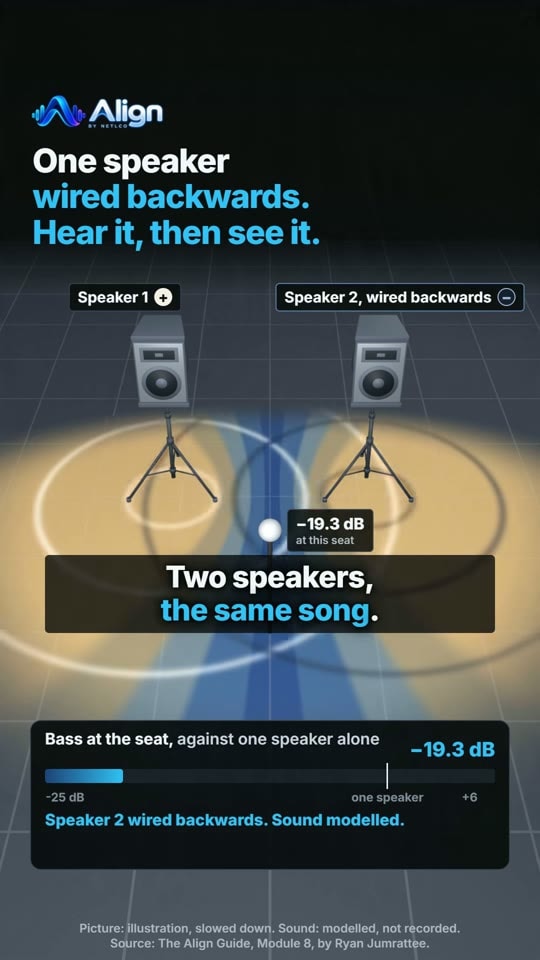 1:16One speaker wired backwards: what happens to the bass?Its cone pulls in while the other pushes out, and in the deep bass the two cancel. A dip of 15 to 25 dB is common in a real room.
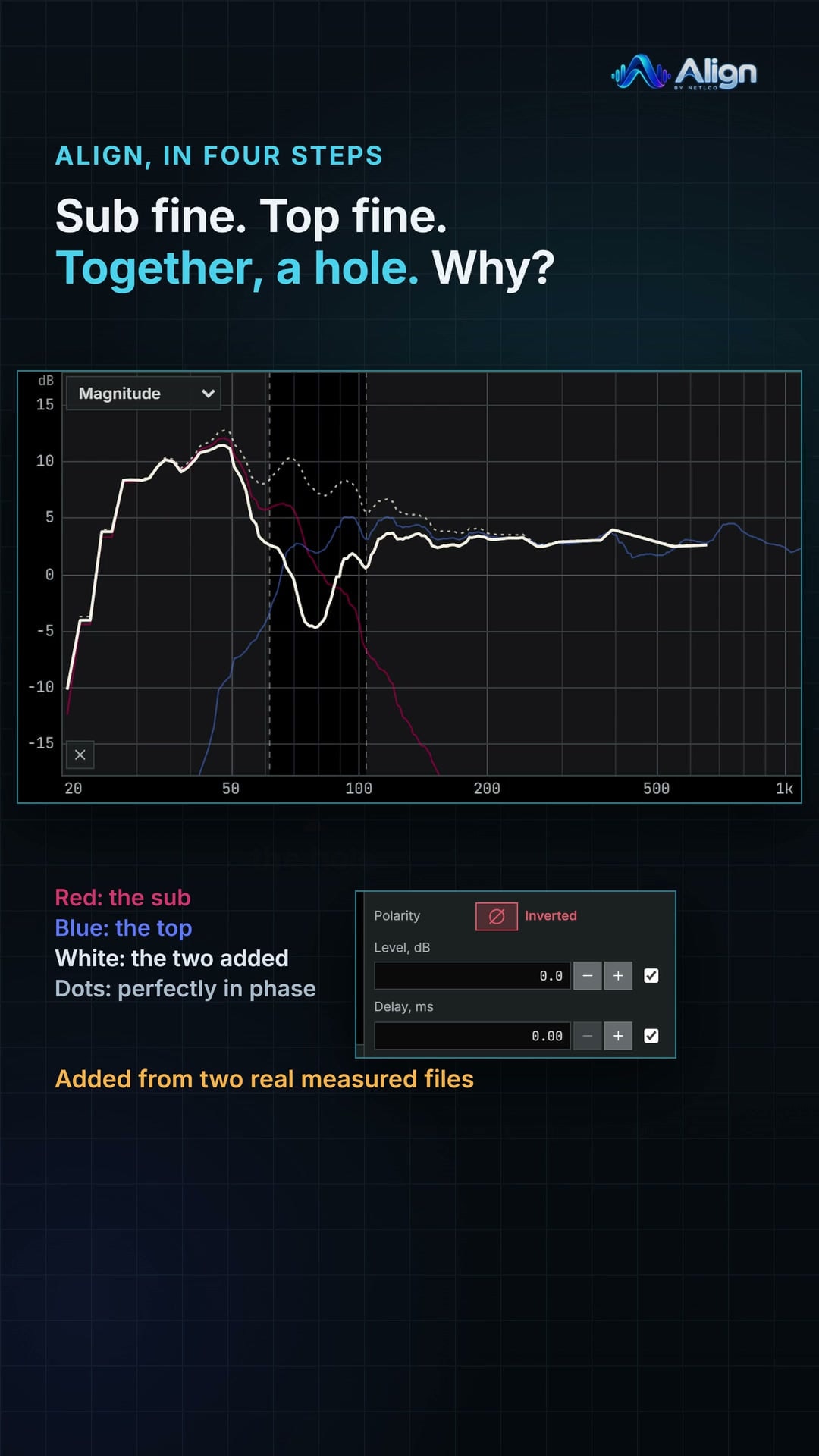 0:34Sub fine, top fine, but a hole together?Align's Auto Phase checks the sub both ways at its best delay: normal lines up 100%, wired backwards the sum loses 17.3 dB. Set it back and the hole fills. Auto crossover then tries 81 filters and ranks them, and Auto EQ brings down the bass bump. Simulated from two real measured files, a sub and a top that were not measured on one clock, so yours will differ. Run the same four steps on your own system.
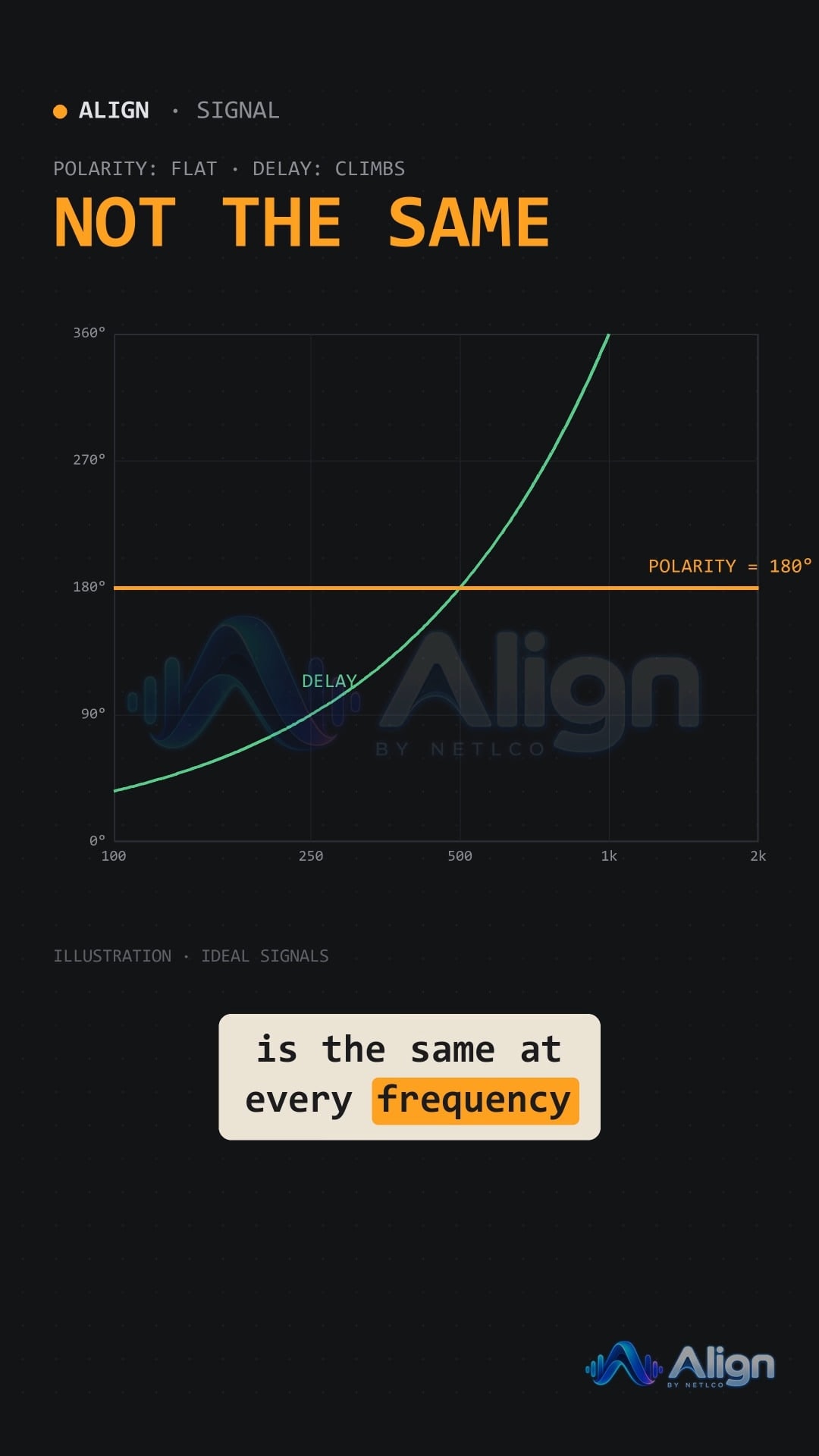 0:46Does the phase button flip the phase?Polarity turns the waveform upside down: every frequency, at the same instant, a flat 180°.
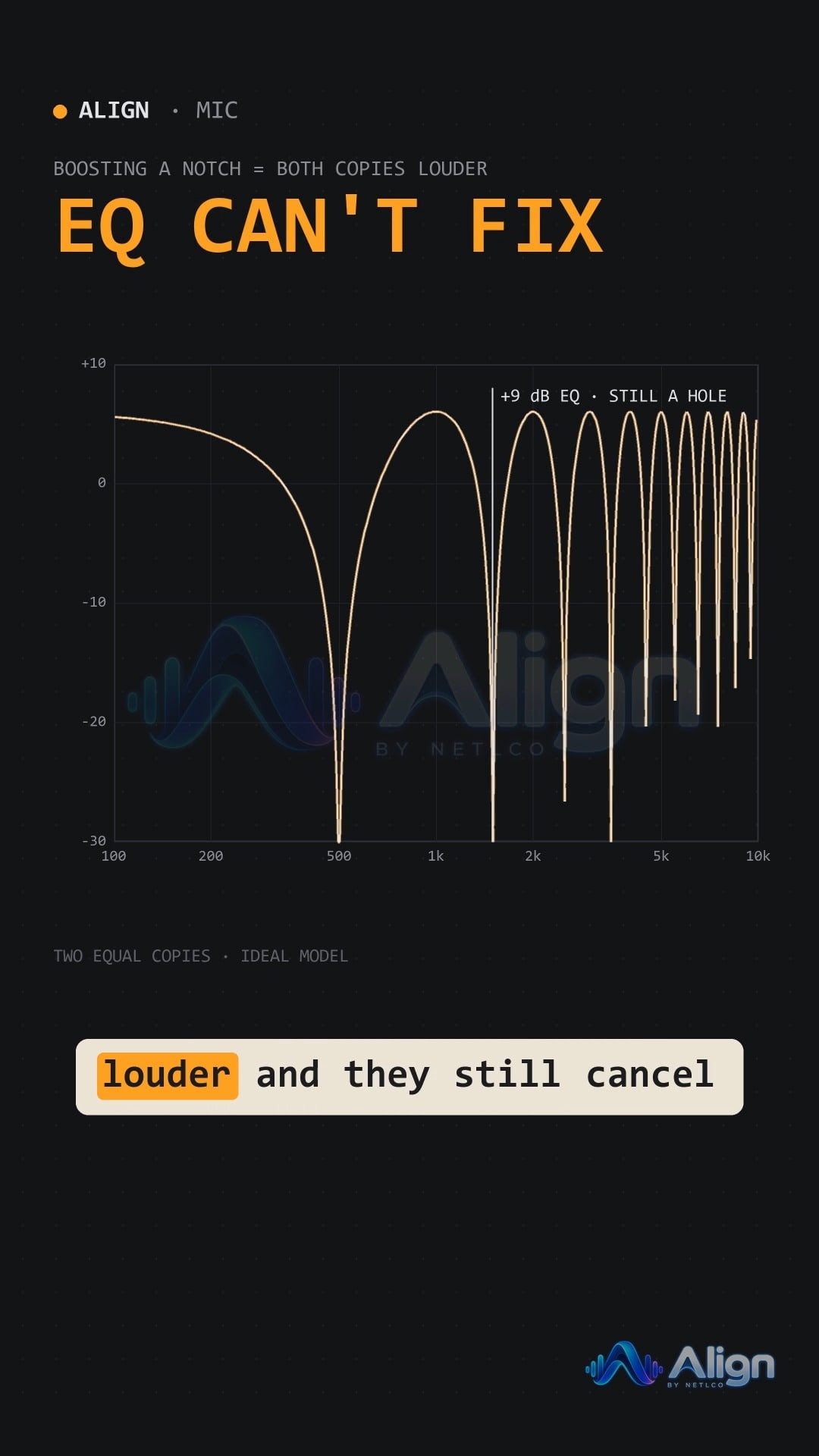 0:42Two mics on one guitar, or two speakers playing the same thing. Why does it sound hollow?If one copy arrives 1 ms after the other, they cancel at 500 Hz, 1.5 kHz, 2.5 kHz and on up. Plot it and it looks like a comb: comb filtering.