
What three numbers describe a sound wave?
Amplitude: how big the wave is. Bigger swings in air pressure sound louder. We measure it in decibels.
0:53 video
The working
- +6 dB = 2× the pressure
- +20 dB = 10× the pressure
Frequency: how many cycles pass each second, in hertz. Low notes are slow, high notes are fast. People hear from about 20 Hz to 20 kHz.
Wavelength: how far one cycle travels. Wavelength = 343 ÷ frequency (speed of sound in m/s).
- 20 kHz → 1.7 cm
- 1 kHz → 34 cm
- 50 Hz → 6.9 m
That's why bass wraps around boxes and walls, and highs beam straight ahead.
See all three live in Align: the level, the frequency, and the delay between your speakers.
Notes: speed of sound 343 m/s at 20 °C. Graphics are illustrations; the Align screens are the real RTA and transfer function views.
More questions
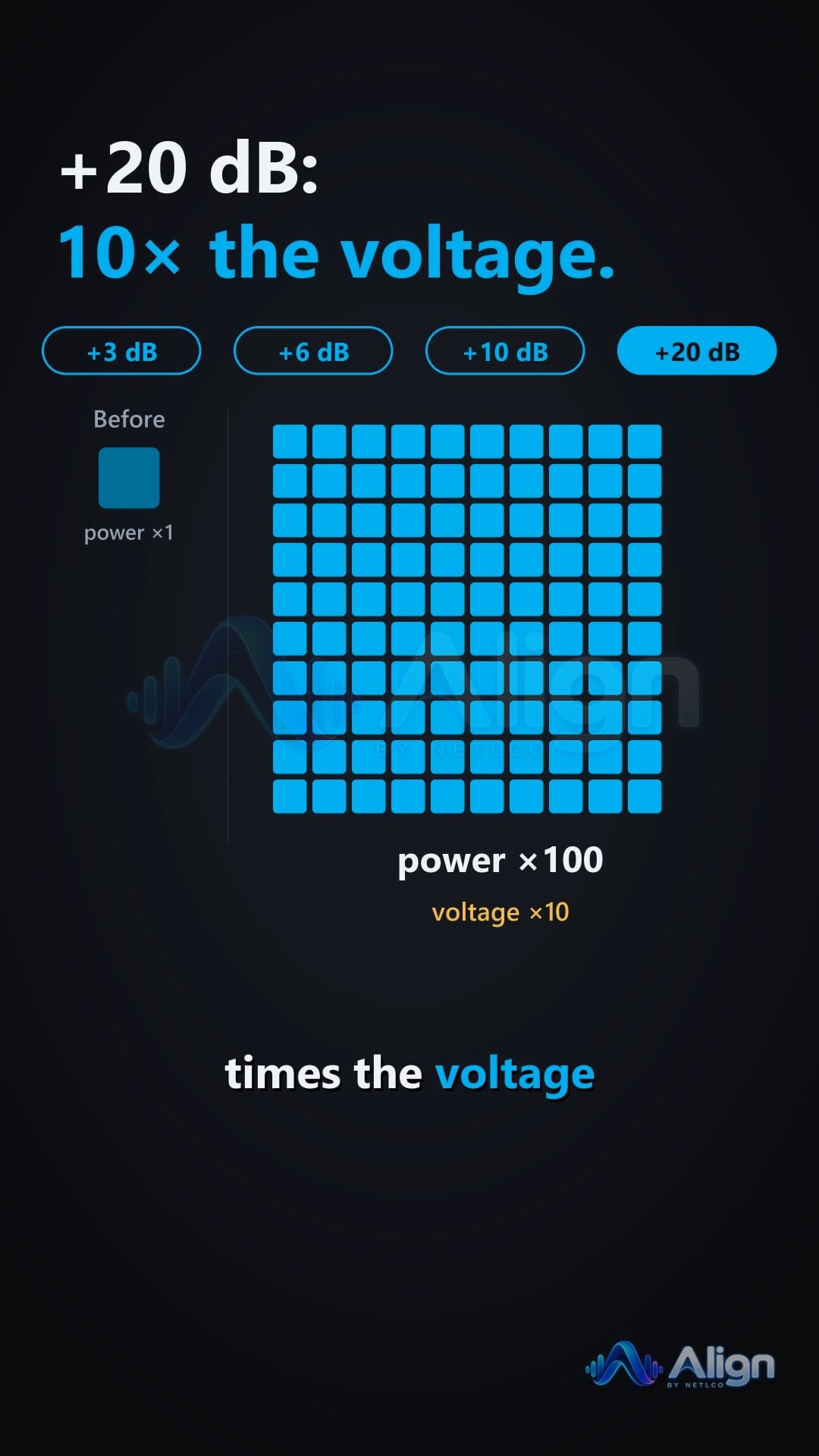 0:27What does +3 dB actually mean?A decibel compares two levels. It's a ratio, not a loudness on its own.
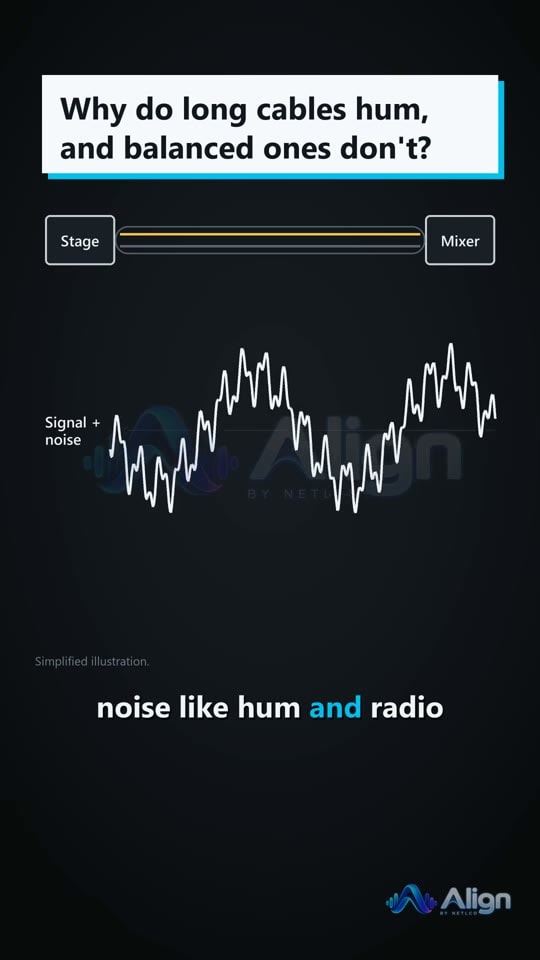 0:20Why do long cables hum, but balanced ones don’t?A balanced cable sends the signal twice, one copy flipped. Noise lands on both wires the same way, and at the input the two are subtracted: the signal doubles and the noise cancels.
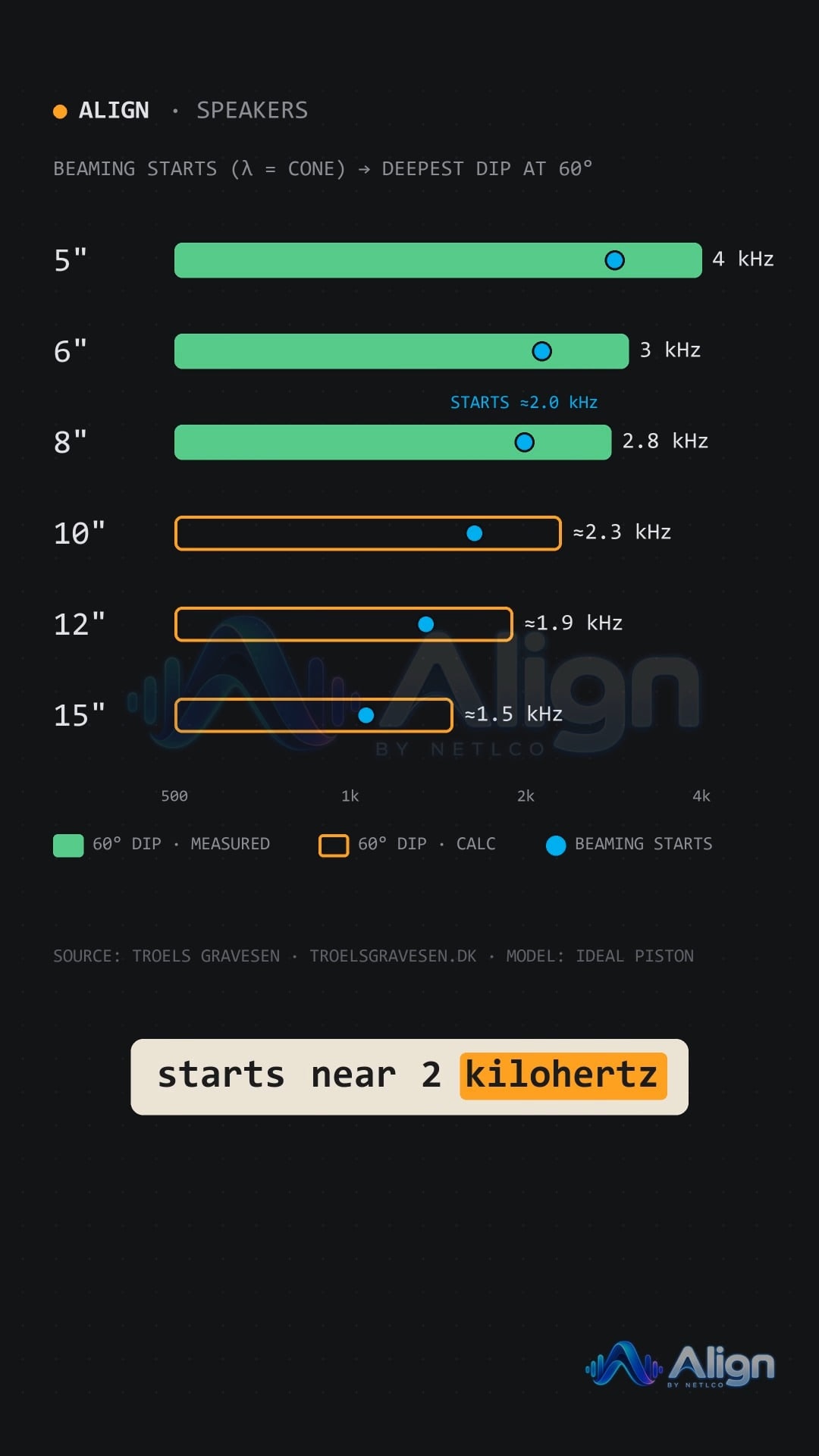 1:01Why does a big speaker sound dull when you're off to the side?It beams: once the wavelength shrinks to the size of the cone, about 2 kHz for an 8 inch, the sound off to the side starts falling away.
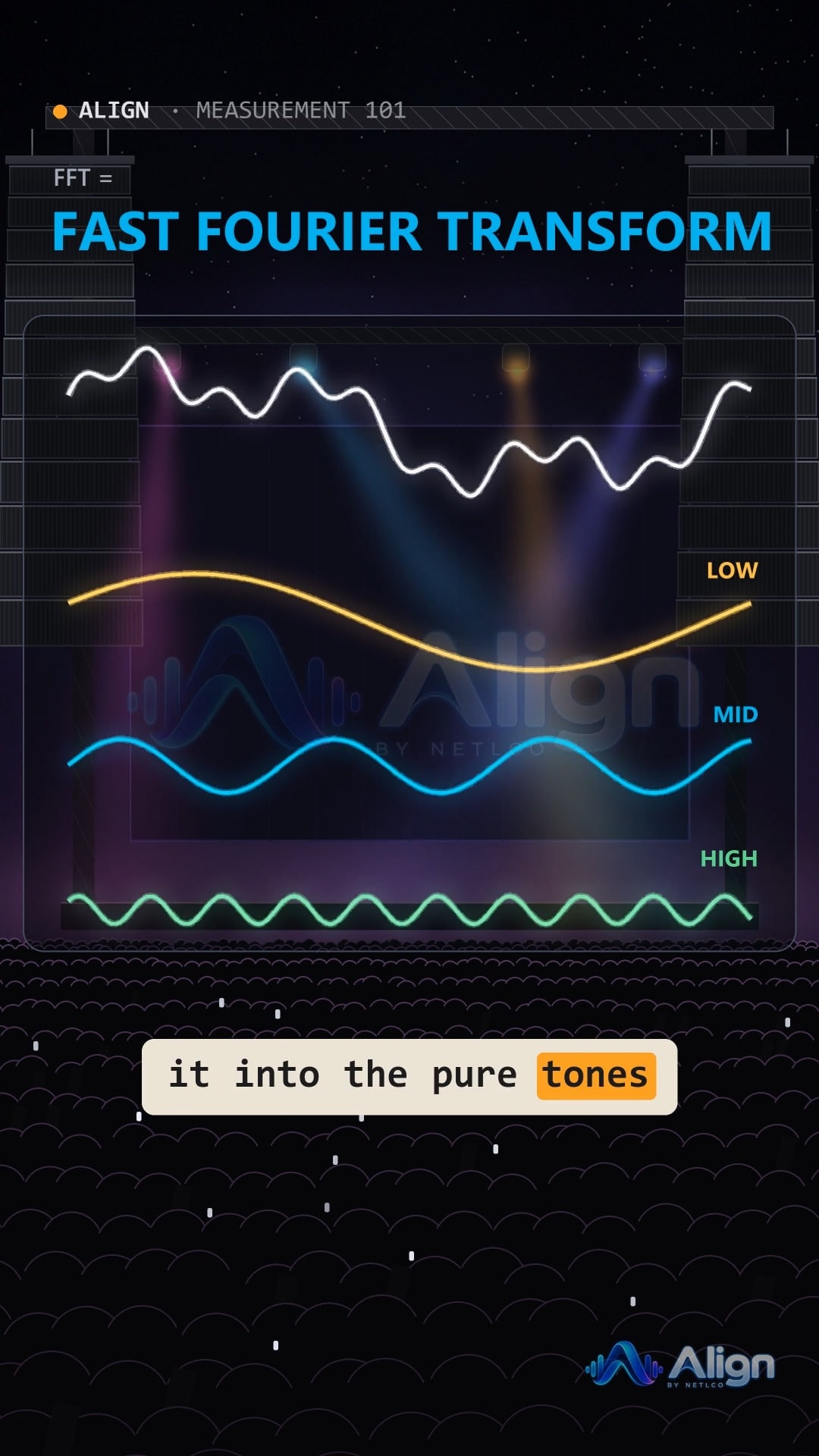 0:49What is the FFT behind every RTA?Fast Fourier Transform. It takes a messy chunk of sound and splits it into the pure tones inside it, like a prism turns white light into a rainbow.