
Why do long cables hum, but balanced ones don’t?
A balanced cable sends the signal twice, one copy flipped. Noise lands on both wires the same way, and at the input the two are subtracted: the signal doubles and the noise cancels.
0:20 video
The working
An unbalanced cable has one signal wire, so any hum it picks up along the run goes straight into the input with the music.
A balanced cable, such as XLR, carries the signal on two wires, one of them flipped. Hum lands on both wires the same way. The input flips one back and adds them, so the music doubles and the hum cancels.
That is why balanced cable wins on long runs to front of house.
More questions
 0:27What does +3 dB actually mean?A decibel compares two levels. It's a ratio, not a loudness on its own.
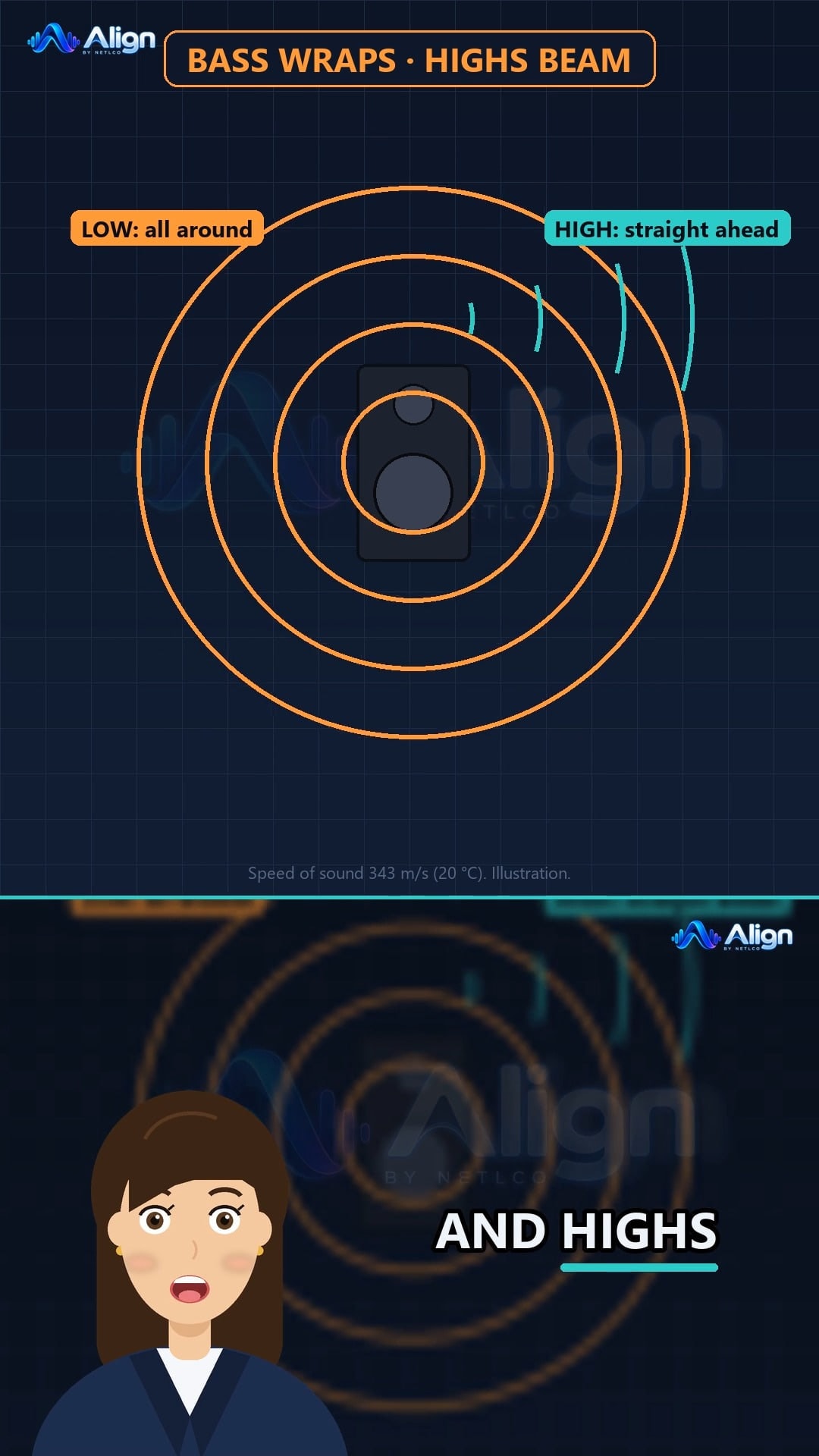
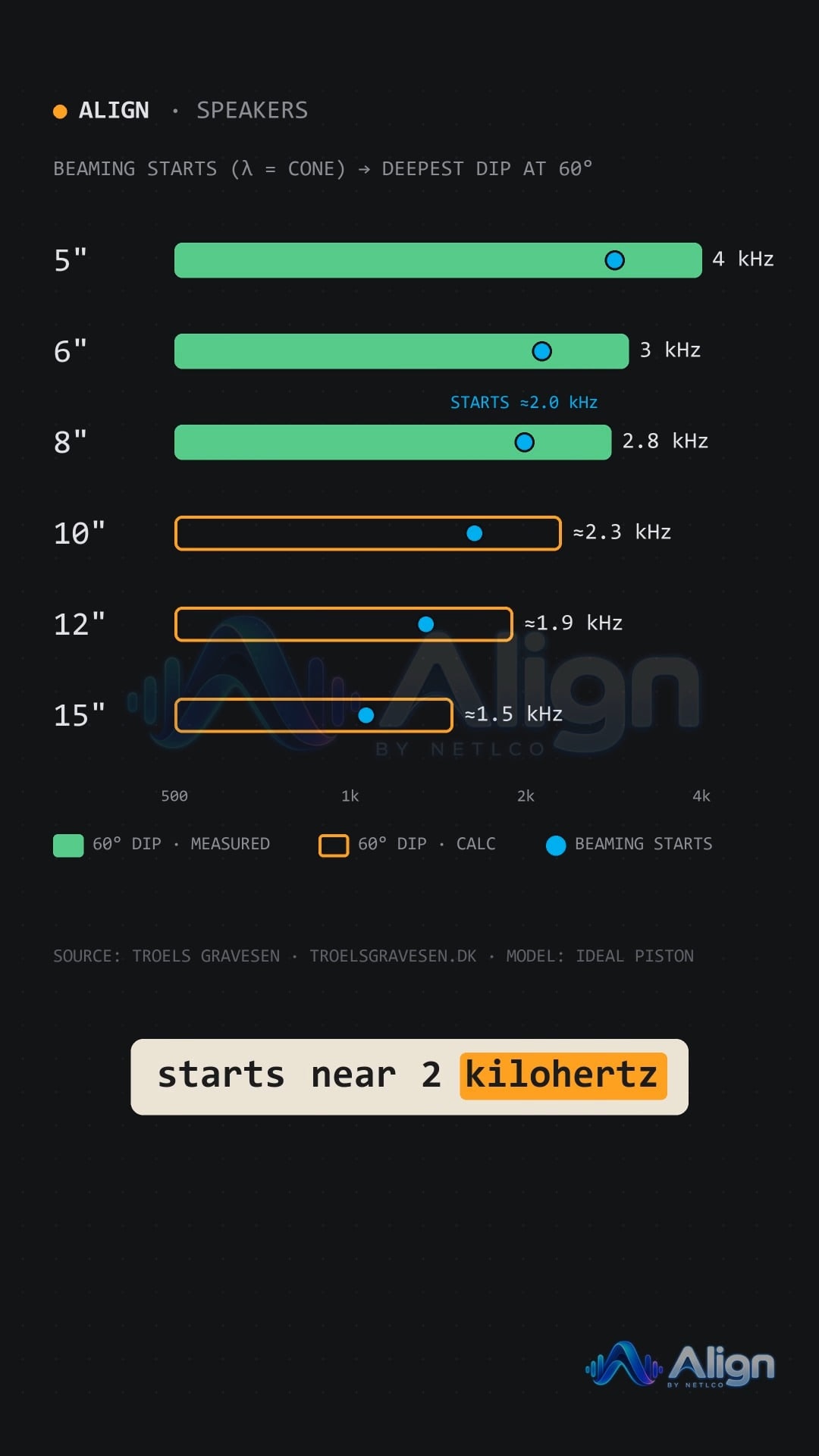 1:01Why does a big speaker sound dull when you're off to the side?It beams: once the wavelength shrinks to the size of the cone, about 2 kHz for an 8 inch, the sound off to the side starts falling away.
 0:53What three numbers describe a sound wave?Amplitude: how big the wave is. Bigger swings in air pressure sound louder. We measure it in decibels.
 0:49What is the FFT behind every RTA?Fast Fourier Transform. It takes a messy chunk of sound and splits it into the pure tones inside it, like a prism turns white light into a rainbow.