
Why can't a stadium crowd clap in time?
It's not the crowd's fault. Sound covers about 3 ms per metre. Someone 100 m back hears the beat about 290 ms late. They clap right on it, but their clap needs another 290 ms to travel back to the front.
0:47 video
The working
So from the front, the back row's clap lands almost 600 ms after the beat. At 120 BPM, that's more than a whole beat. The clapping turns into a rumble.
Same reason the big screen looks out of sync at the back: light arrives instantly, sound doesn't.
Sources: speed of sound in air at 20 °C (343 m/s).
More questions
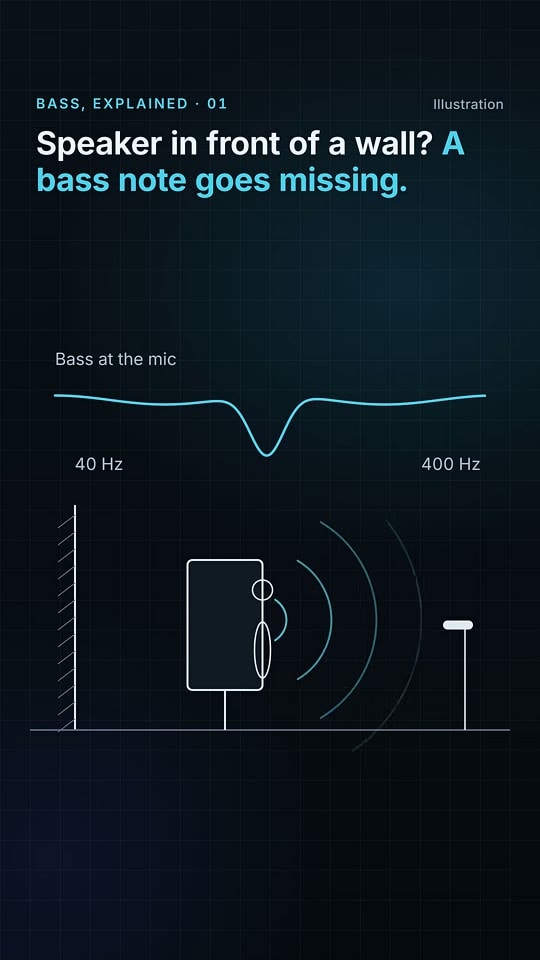 0:54Speaker in front of a wall: why can’t EQ fill the bass hole?Bass bounces off the wall and comes back half a wave late, which cancels one note. Boosting it boosts the reflection too, so the hole stays. Move the speaker or treat the wall.
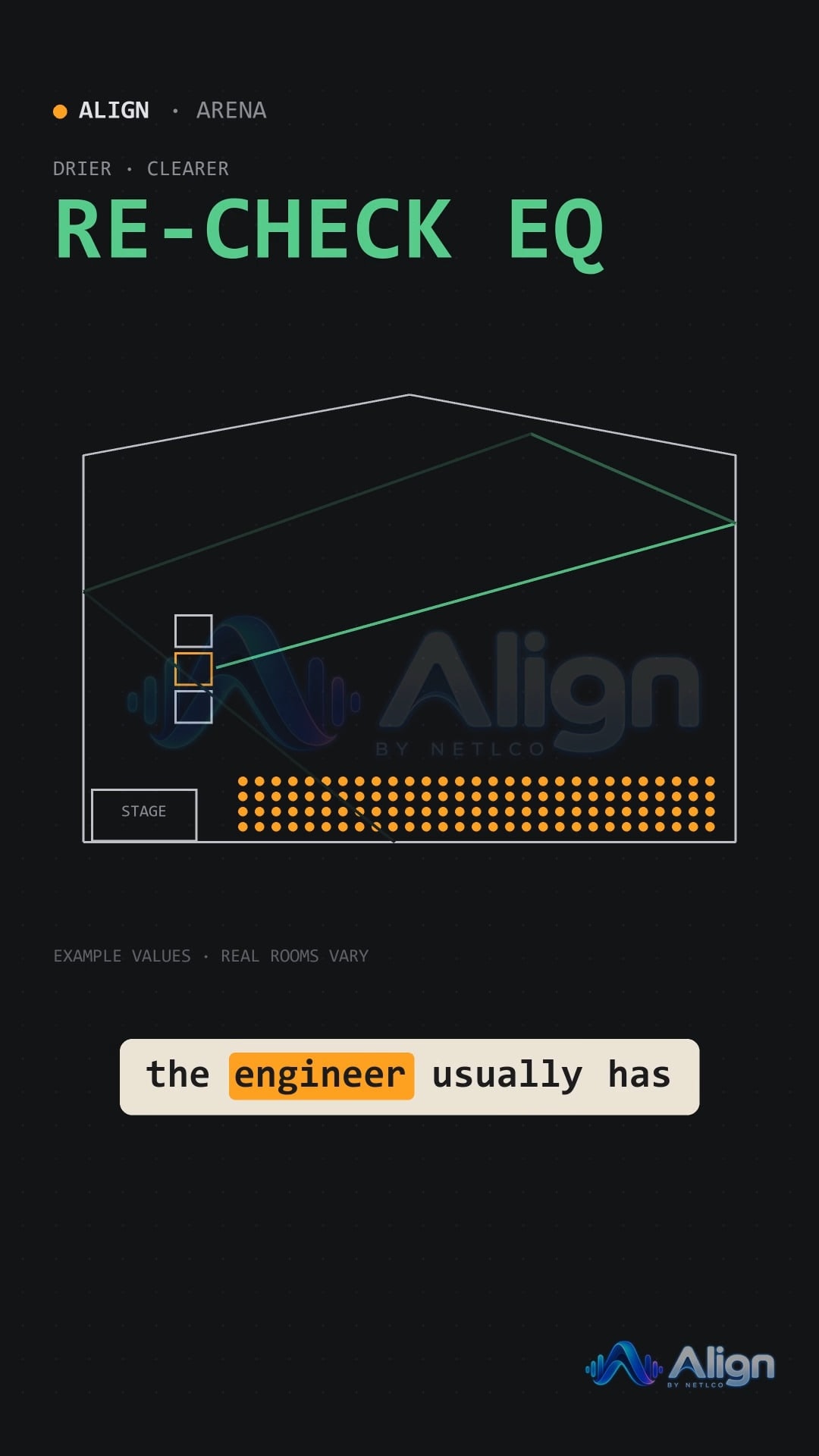 0:41Why does a concert sound different at soundcheck than once the crowd shows up?An empty arena is hard floors and seats, so sound bounces around and the room keeps ringing. Fill it with people and every body soaks up sound, especially the mids and highs.
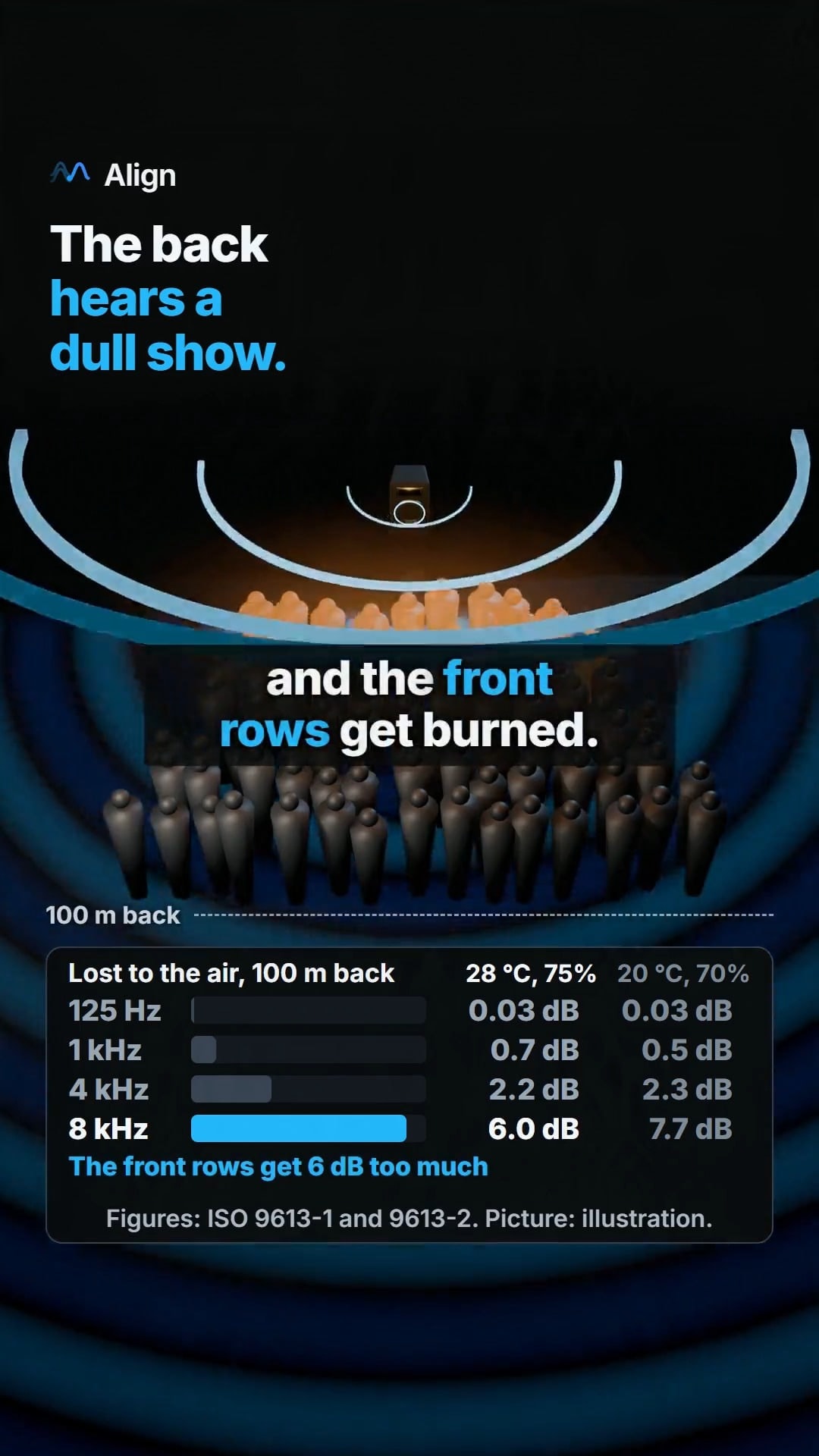 0:34Why does the back of the crowd hear a dull show?Air soaks up the highs. 100 m back, in warm air (28 °C, 75% humidity), 8 kHz loses about 6 dB, while 1 kHz loses under 1 dB. That's on top of the normal drop with distance.
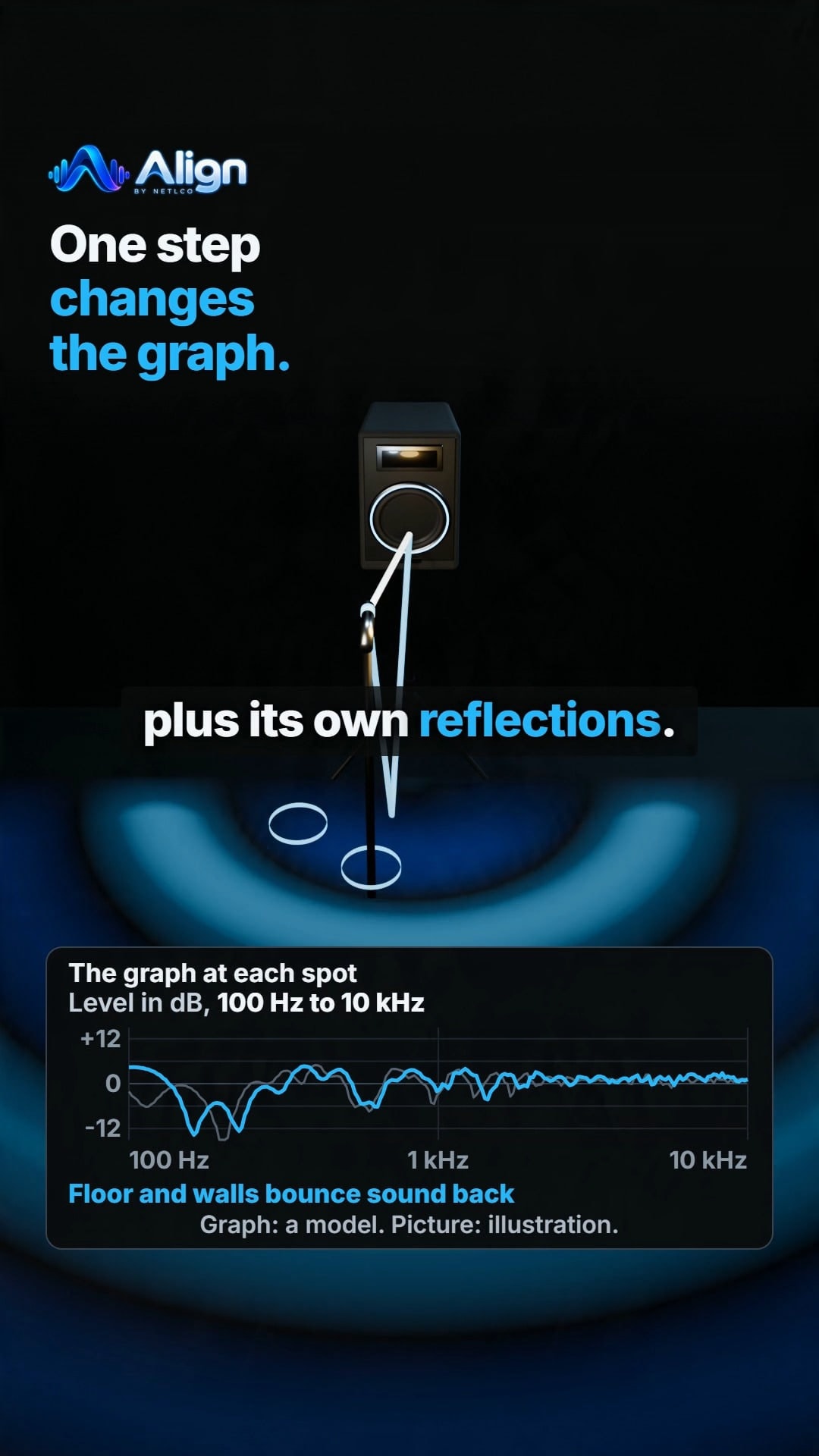 0:36Move your measurement mic one step, and the graph changes. Why?Every spot hears the speaker plus its own reflections from the floor and walls, so the peaks and dips move with the mic. One spot can fool your EQ.