
Still boosting that dip, but it barely moves?
More EQ might not be the answer. A deep or narrow dip is often a cancellation, and boosting it spends headroom without filling it.
0:29 video
The working
If a dip is deep, more than 6 dB below the band around it, or narrow, it usually comes from two sounds cancelling: a reflection, or two speakers out of time. EQ adds to both, so the dip stays.
Align’s EQ suggests filters and says plainly which regions it leaves alone and why, so you can find the cause before using more headroom: move the speaker, the mic or the timing, then measure again.
More questions
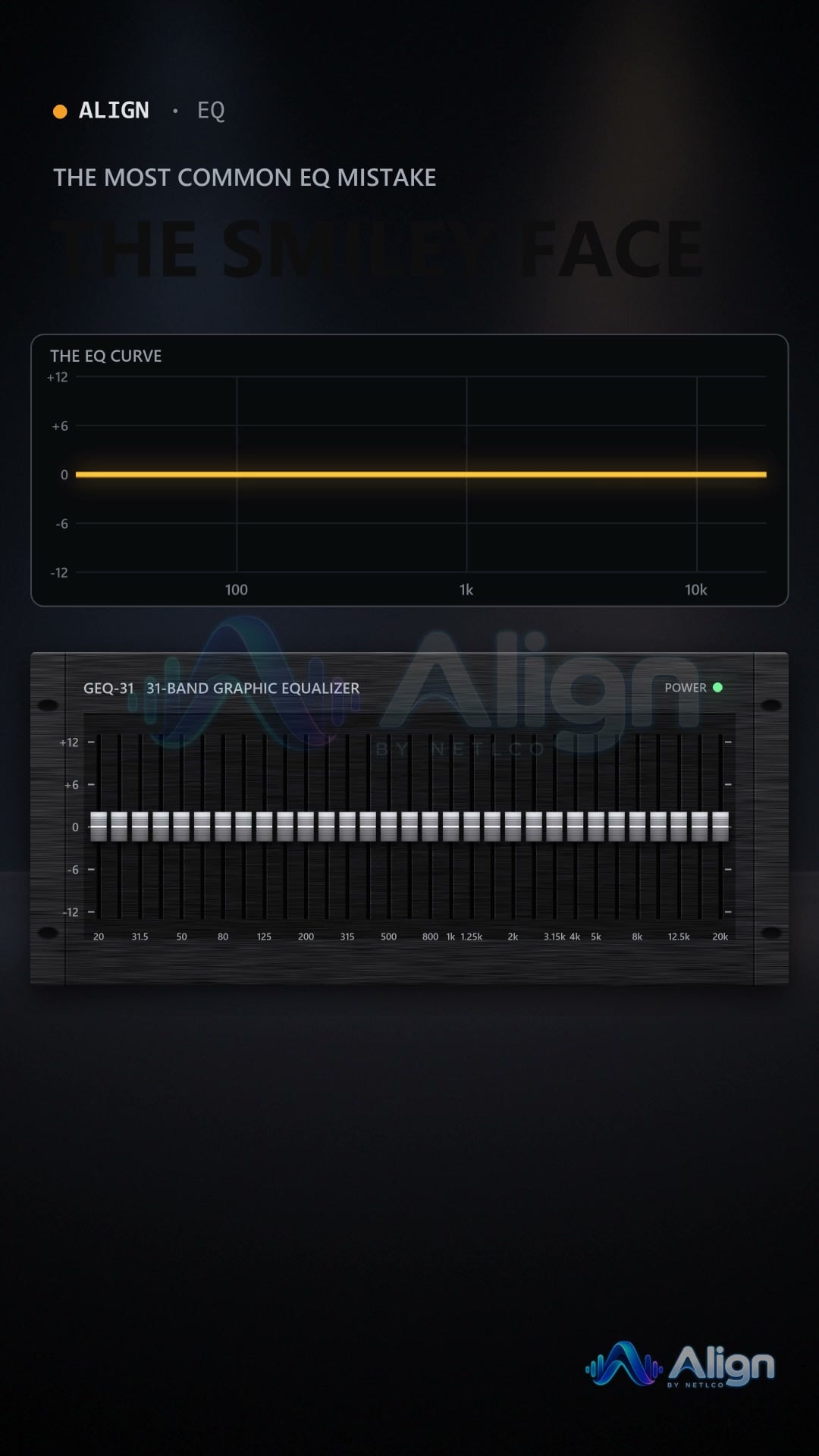 0:50The smiley face EQ: why do the vocals vanish?Boost the lows, boost the highs, scoop the mids, and suddenly the vocals vanish. It sounds big on its own, but it falls apart in a real mix.
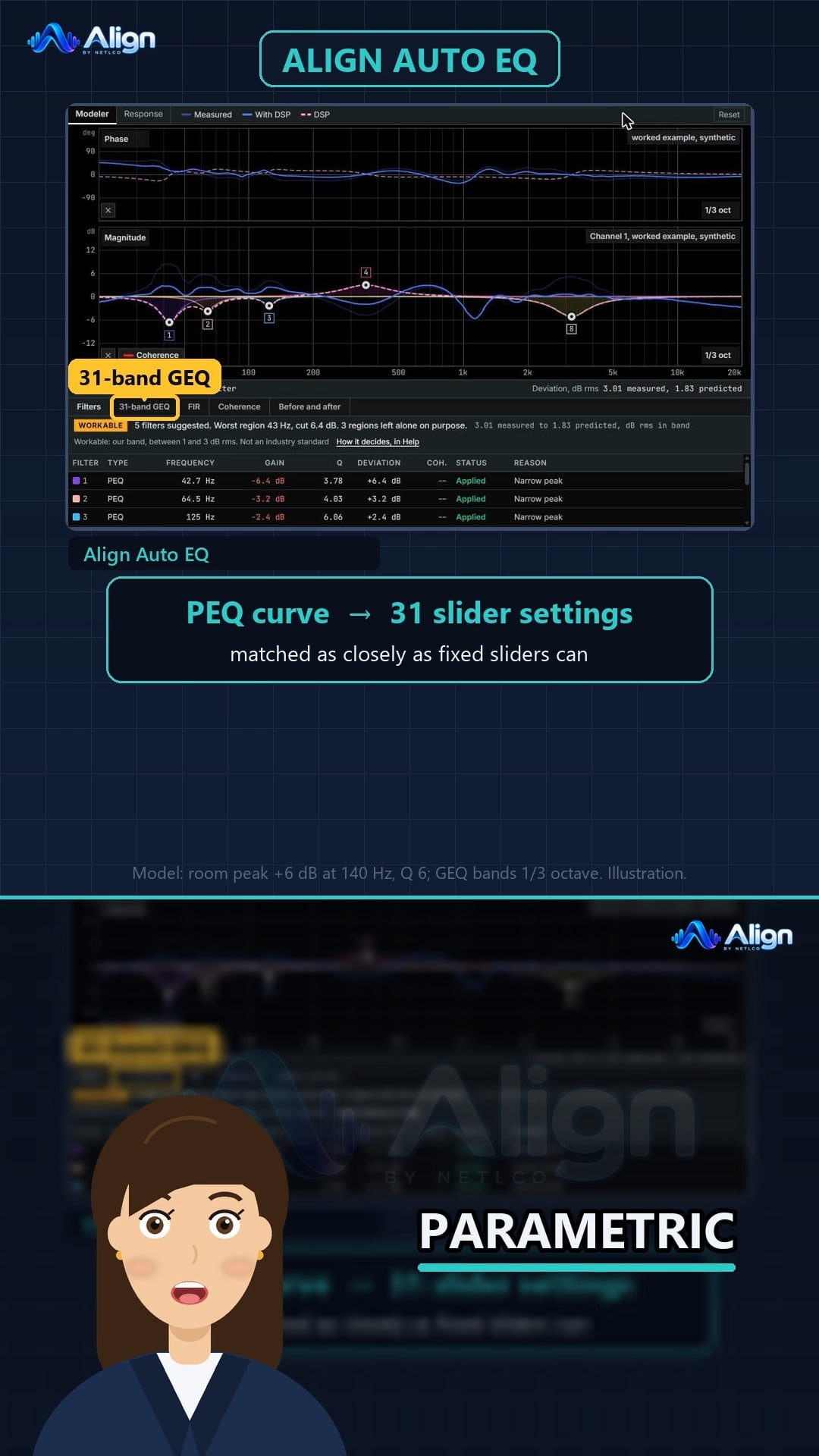 0:59Graphic EQ or parametric EQ?Same job, different handles. Graphic EQ: 31 fixed sliders, a third of an octave apart. You only pick how far up or down. But say the room peaks at 140 Hz (+6 dB). There's no 140 slider, only 125 and 160.
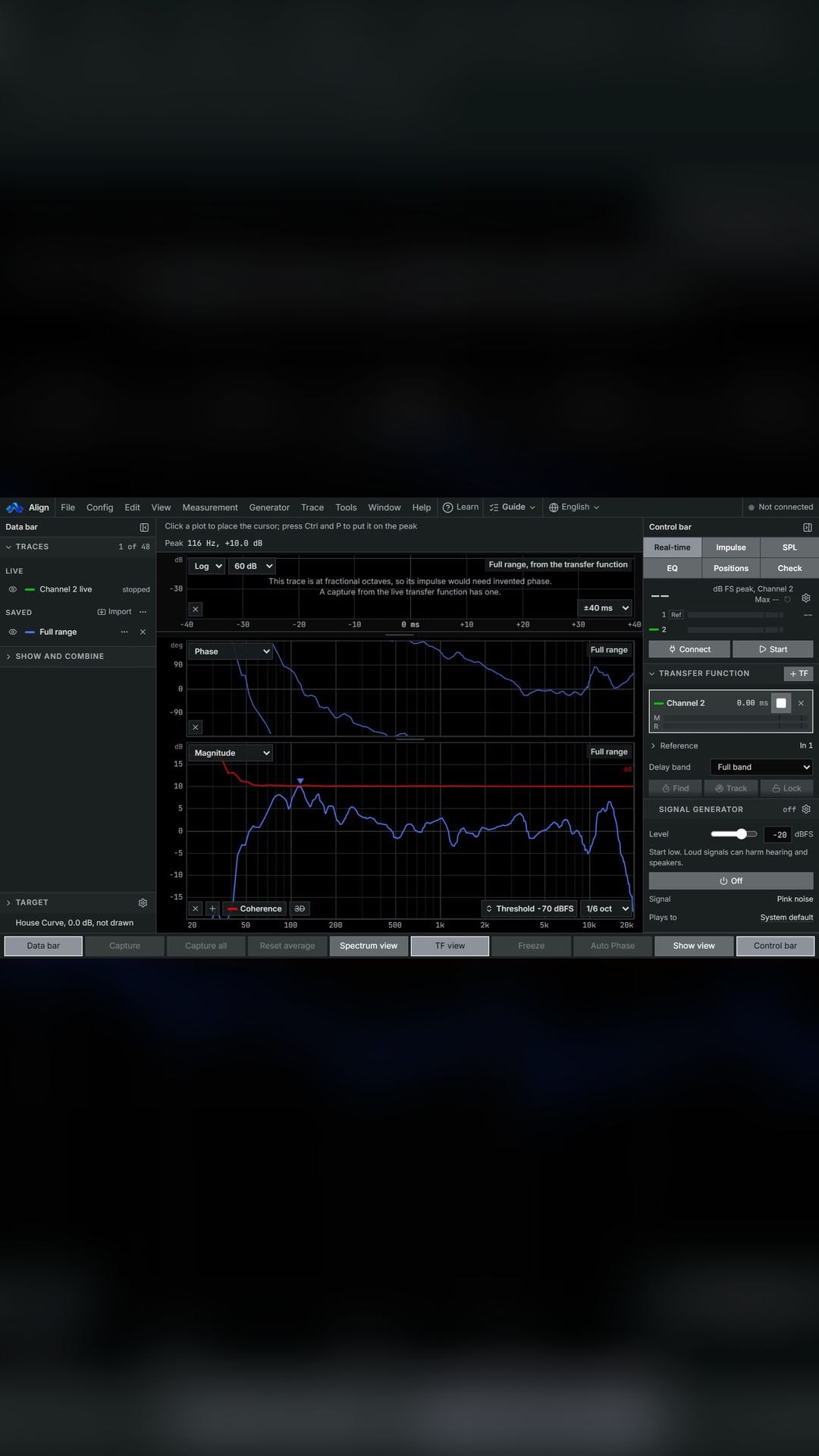 1:30Auto EQ on a full range speakerImport the trace, let Auto EQ fit the filters, and see the corrected result.
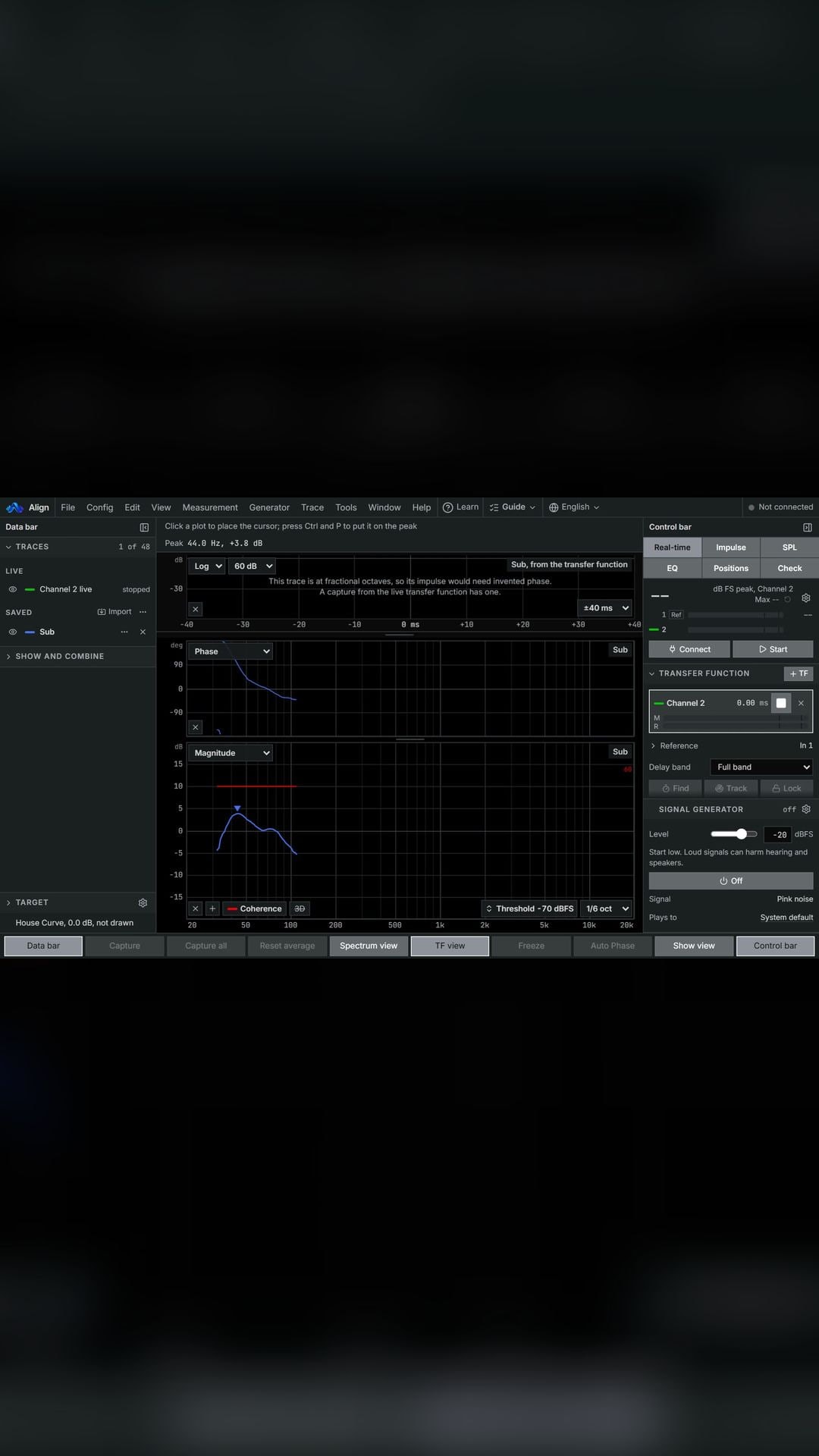 1:24Auto EQ on a sub, from import to resultOne trace in, Auto EQ fits the filters, and you see the result straight away.