
Graphic EQ or parametric EQ?
Same job, different handles. Graphic EQ: 31 fixed sliders, a third of an octave apart. You only pick how far up or down. But say the room peaks at 140 Hz (+6 dB). There's no 140 slider, only 125 and 160.
0:59 video
The working
Parametric EQ: you choose the frequency, the gain and the width (Q).
One filter right on 140 Hz, -6 dB, same width as the peak → flat.
Only have a graphic EQ on the rig? Align's Auto EQ does the maths. It takes the parametric curve and sets all 31 sliders to match it as closely as they can:
- 125 Hz: -3 dB
- 160 Hz: -2 dB
- 100 Hz and 200 Hz: +0.5 dB
That's as close as fixed sliders get: the peak drops from +6 to +3.7 dB.
Parametric for exact fixes. Graphic when that's what the rig has. Align gives you both:
Notes: model of a +6 dB room peak at 140 Hz, Q 6; graphic EQ bands are 1/3 octave. Graphs are illustrations; the Align screen is the real Auto EQ view.
More questions
 0:50The smiley face EQ: why do the vocals vanish?Boost the lows, boost the highs, scoop the mids, and suddenly the vocals vanish. It sounds big on its own, but it falls apart in a real mix.
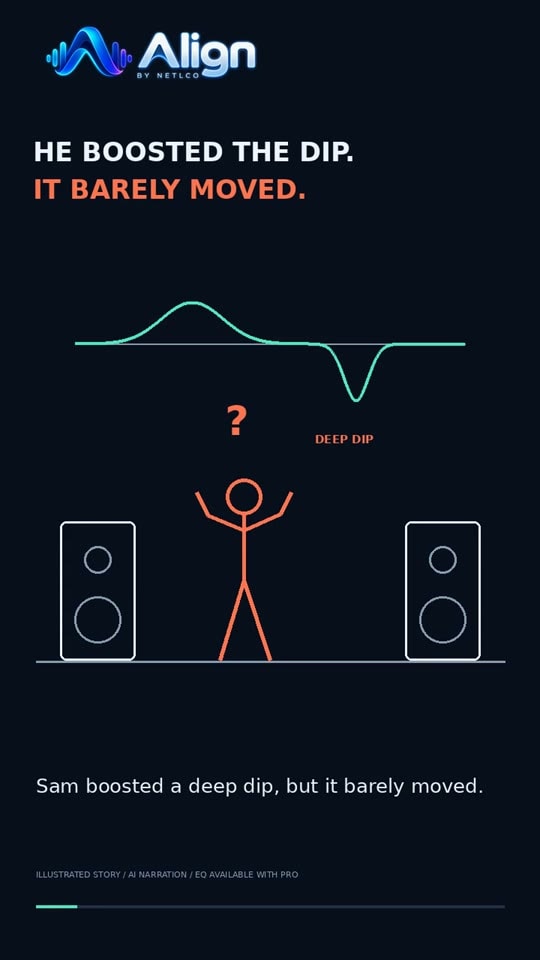 0:29Still boosting that dip, but it barely moves?More EQ might not be the answer. A deep or narrow dip is often a cancellation, and boosting it spends headroom without filling it.
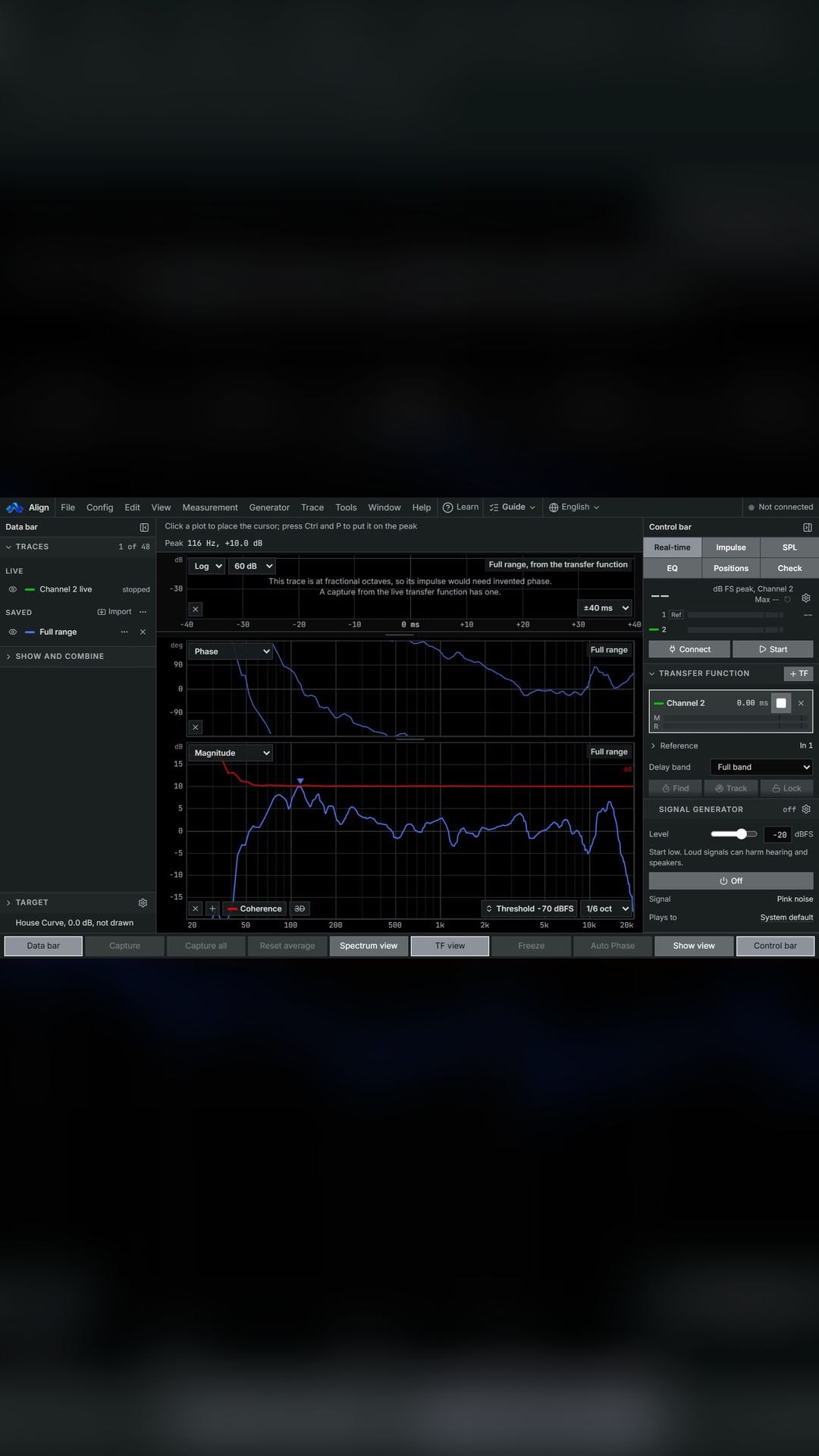 1:30Auto EQ on a full range speakerImport the trace, let Auto EQ fit the filters, and see the corrected result.
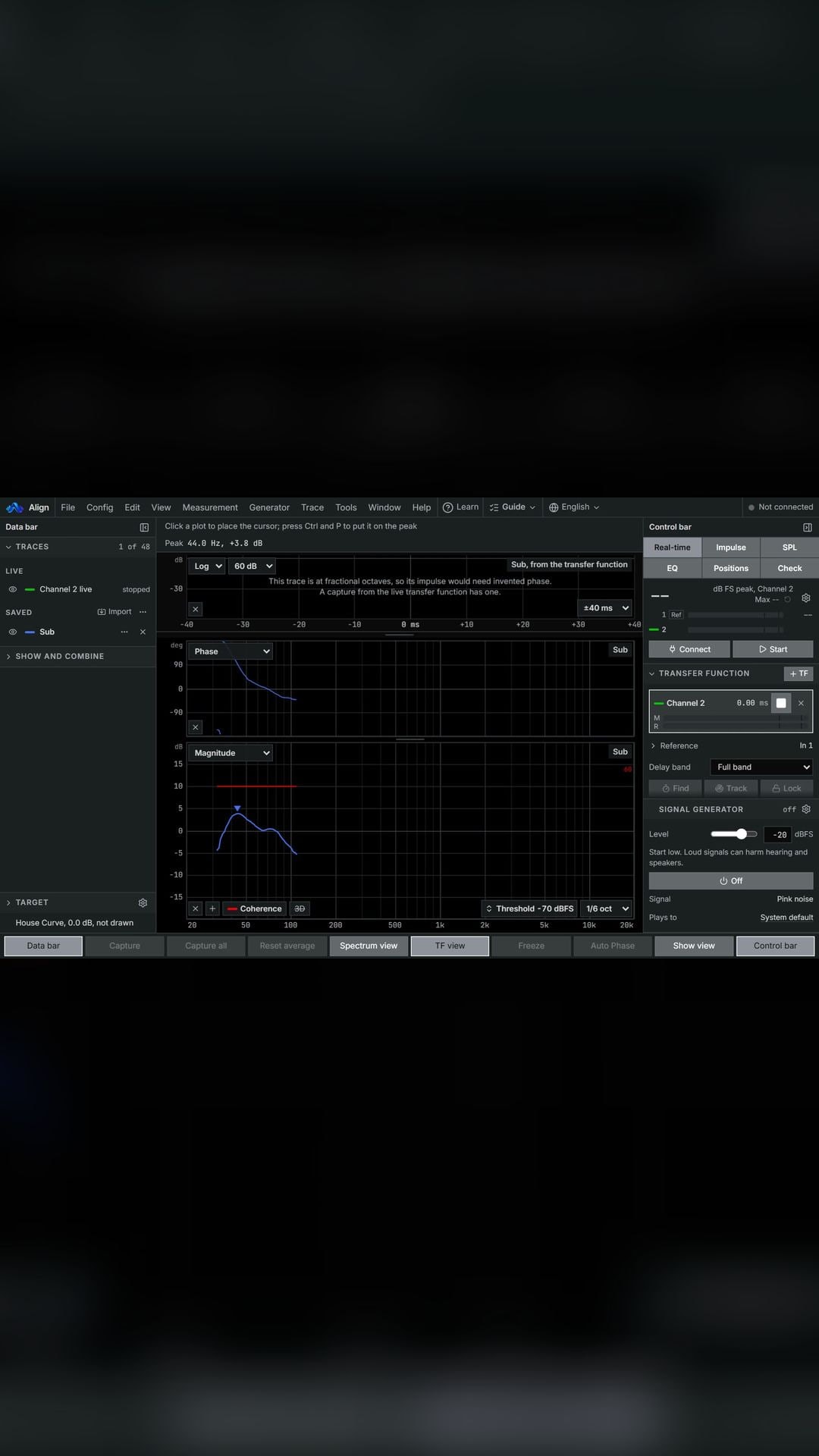 1:24Auto EQ on a sub, from import to resultOne trace in, Auto EQ fits the filters, and you see the result straight away.