
Crossover part 2. A Linkwitz-Riley crossover should sum flat. So why is there a dip?
Part 1 assumed both drivers play from the same spot. They don't: the woofer cone sits deeper than the tweeter. 6 cm is about 0.17 ms, and at a 2 kHz crossover that's 126° out of phase. Each driver is −6 dB at the crossover; in phase they add back to flat, out of phase they leave a hole (about 7 dB here).
0:49 video
The working
The fix: delay the tweeter by the same amount in the DSP until the two phase traces line up. Check the phase, not just the filter name.
Sources: 24 dB Linkwitz-Riley at 2 kHz, ideal drivers, 343 m/s. Offset is a typical example.
More questions
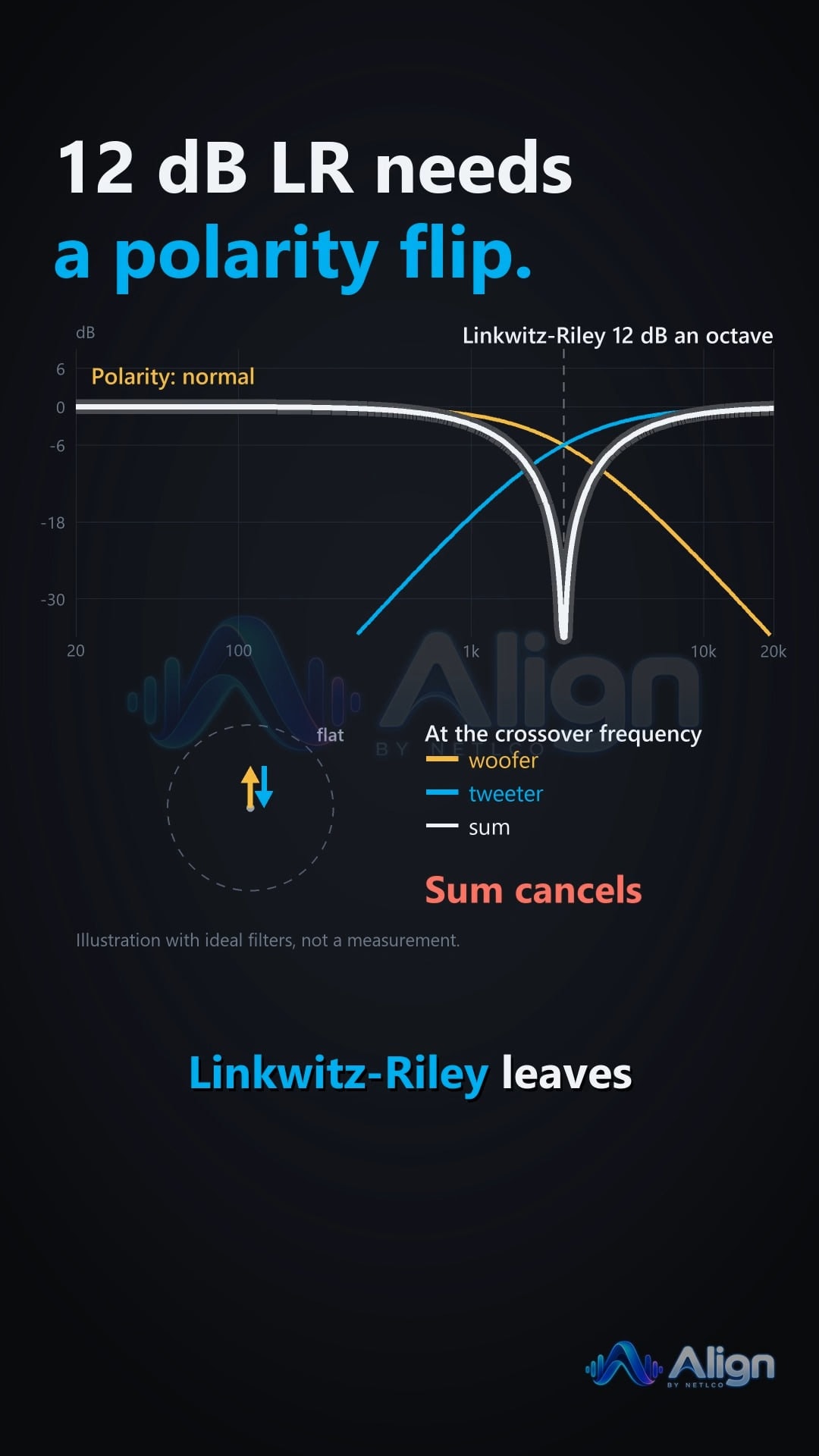 0:52Butterworth or Linkwitz-Riley: which crossover sums flat?Linkwitz-Riley. A 24 dB Linkwitz-Riley is 6 dB down at the crossover, so the two sides sum flat; a 24 dB Butterworth is 3 dB down, so the sum bumps up about 3 dB.
 0:40Why is there a hole in the sound where the woofer and tweeter meet?A crossover splits the signal: lows to the woofer, highs to the tweeter. Around the crossover frequency, both play at once.
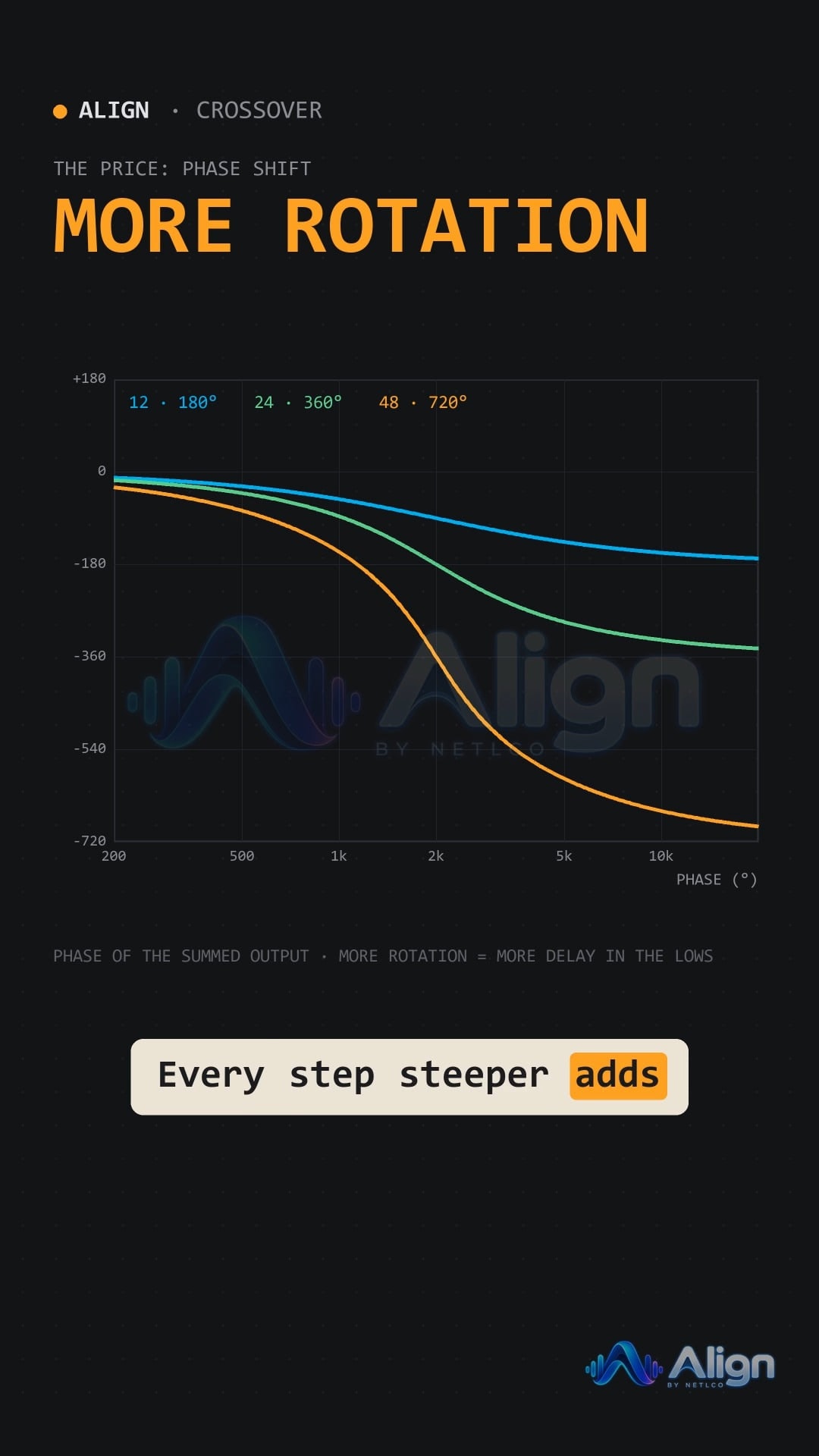 0:50Which crossover slope: 12, 24 or 48 dB per octave?Steeper protects the tweeter. One octave below a 2 kHz crossover, the tweeter is down 14 dB at 12 dB/oct, 25 dB at 24, and 48 dB at 48. Steeper also shortens the zone where both drivers play together.
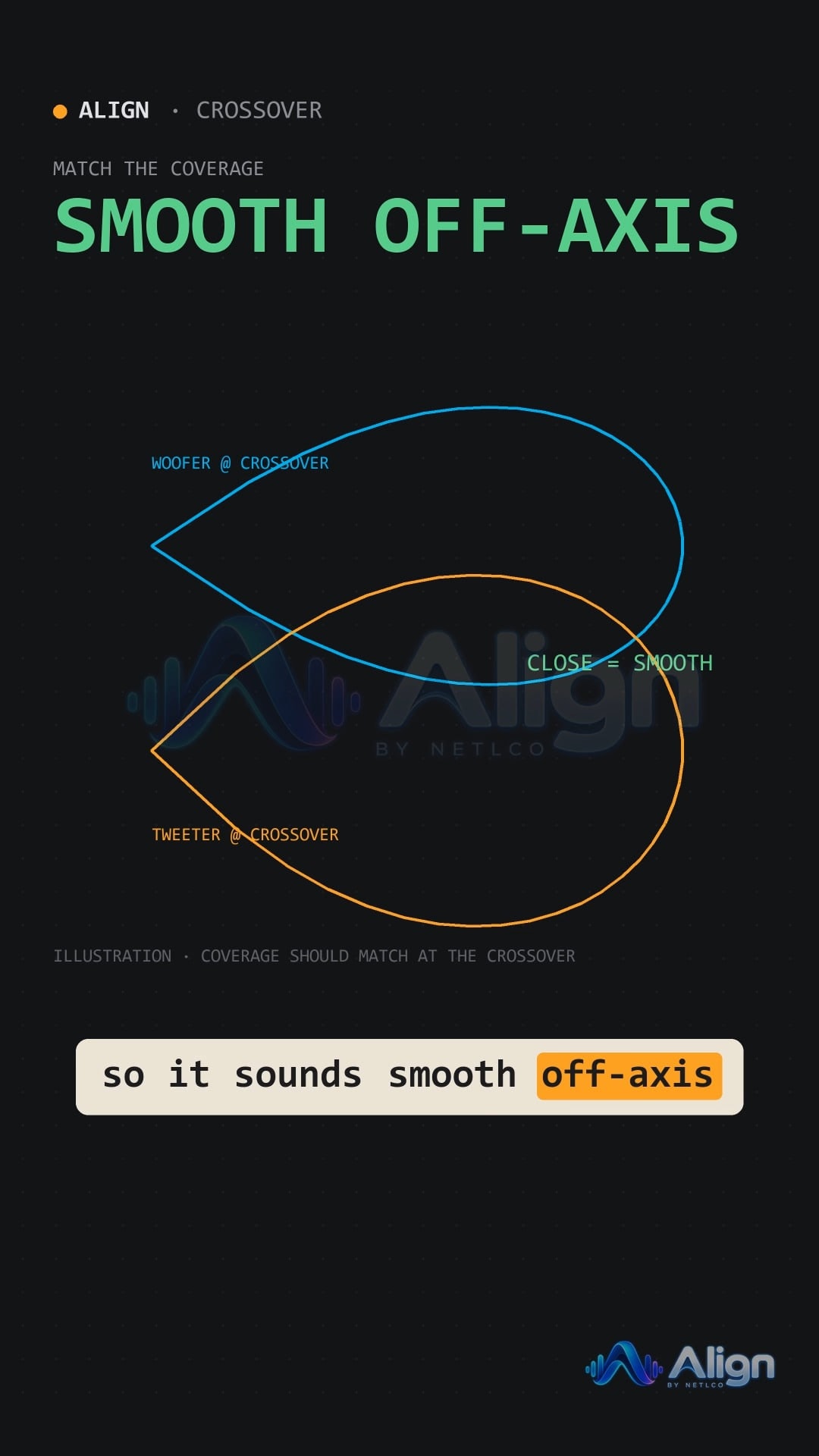 0:47Where should you cross your tops: 1, 2 or 3 kHz?Tweeters hate low notes. A common rule of thumb: cross at least twice the tweeter's resonance (Fs). For a 900 Hz tweeter, that's 1.8 kHz.