
Which crossover slope: 12, 24 or 48 dB per octave?
Steeper protects the tweeter. One octave below a 2 kHz crossover, the tweeter is down 14 dB at 12 dB/oct, 25 dB at 24, and 48 dB at 48. Steeper also shortens the zone where both drivers play together.
0:50 video
The working
The price is phase shift: 180° for 12 dB, 360° for 24, 720° for 48, so the low end lags a little more. FIR filters can be steep with no phase shift, but they add latency, so they suit fixed installs more than live wedges.
Start at 24 dB Linkwitz-Riley, go steeper for a small tweeter, then measure.
Sources: Linkwitz-Riley filter maths (2 kHz crossover).
More questions
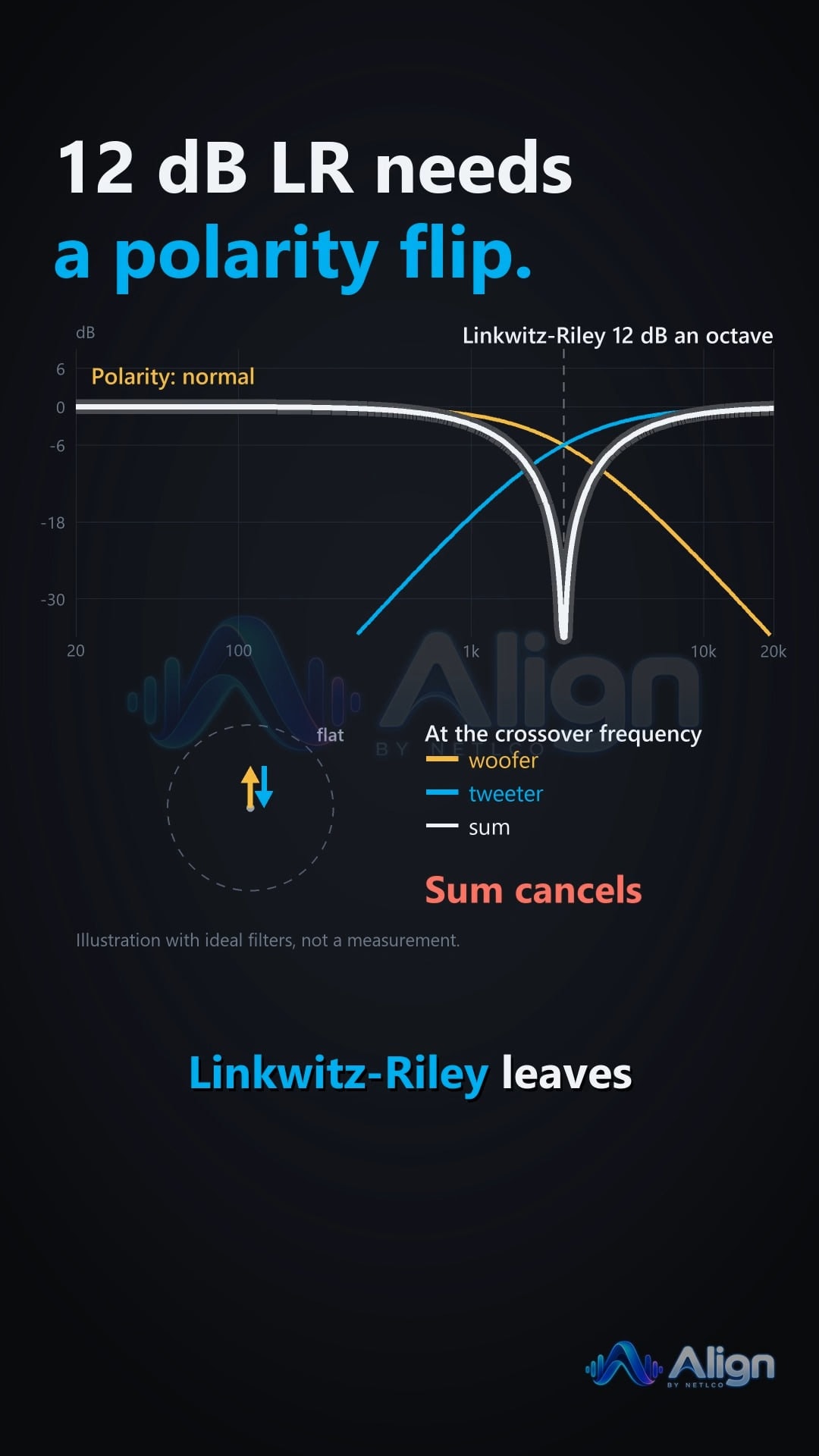 0:52Butterworth or Linkwitz-Riley: which crossover sums flat?Linkwitz-Riley. A 24 dB Linkwitz-Riley is 6 dB down at the crossover, so the two sides sum flat; a 24 dB Butterworth is 3 dB down, so the sum bumps up about 3 dB.
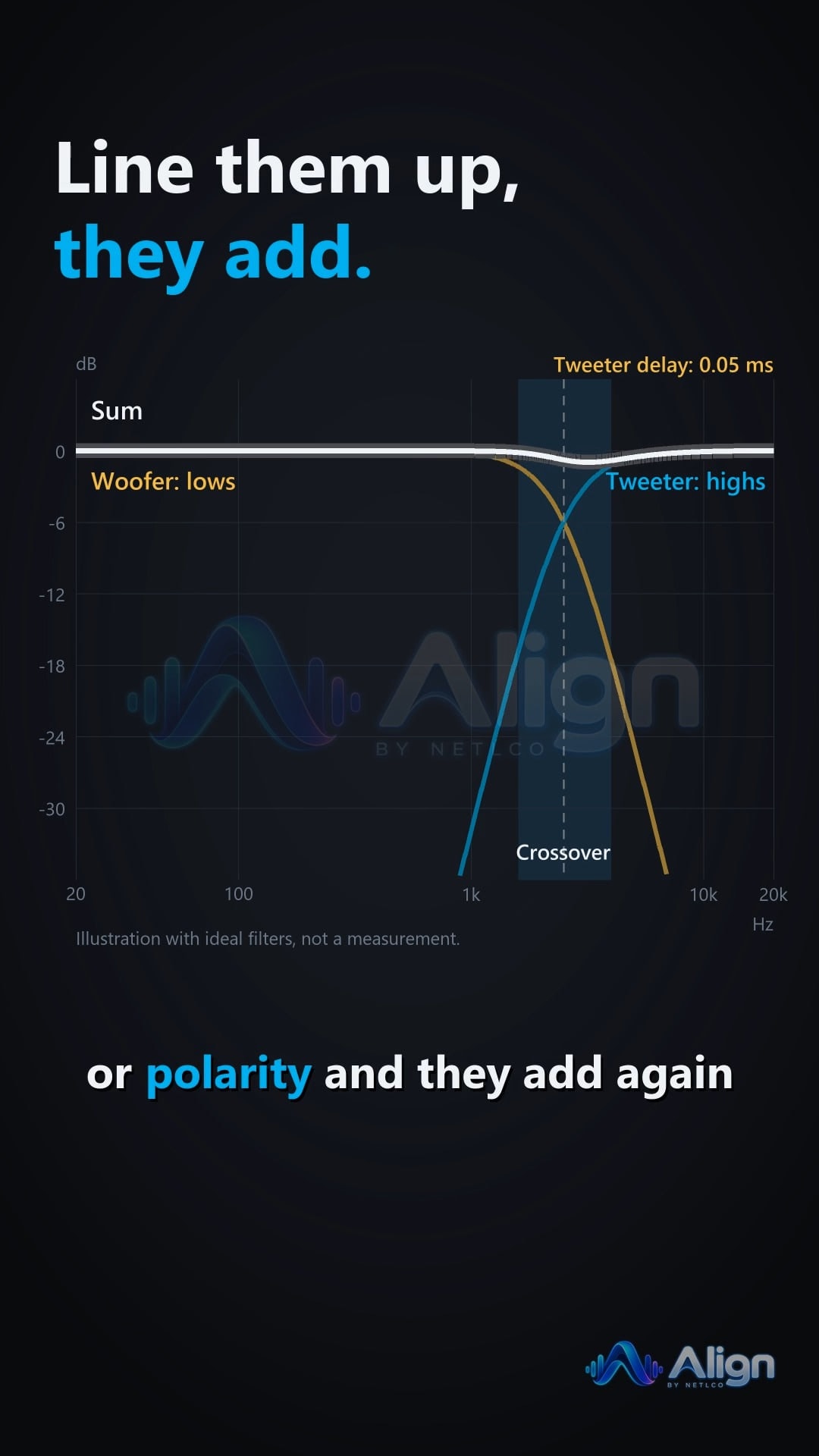 0:40Why is there a hole in the sound where the woofer and tweeter meet?A crossover splits the signal: lows to the woofer, highs to the tweeter. Around the crossover frequency, both play at once.
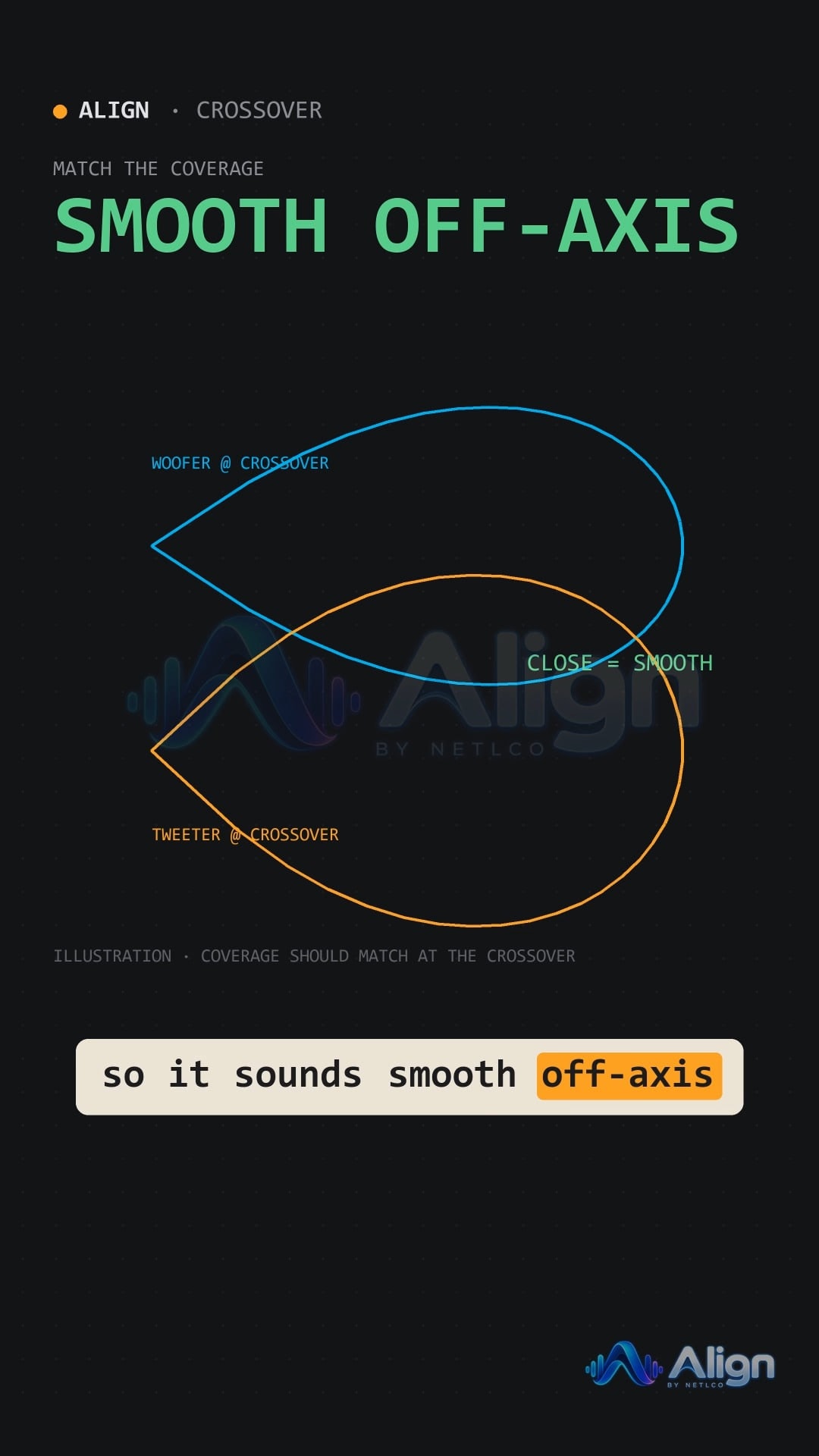 0:47Where should you cross your tops: 1, 2 or 3 kHz?Tweeters hate low notes. A common rule of thumb: cross at least twice the tweeter's resonance (Fs). For a 900 Hz tweeter, that's 1.8 kHz.
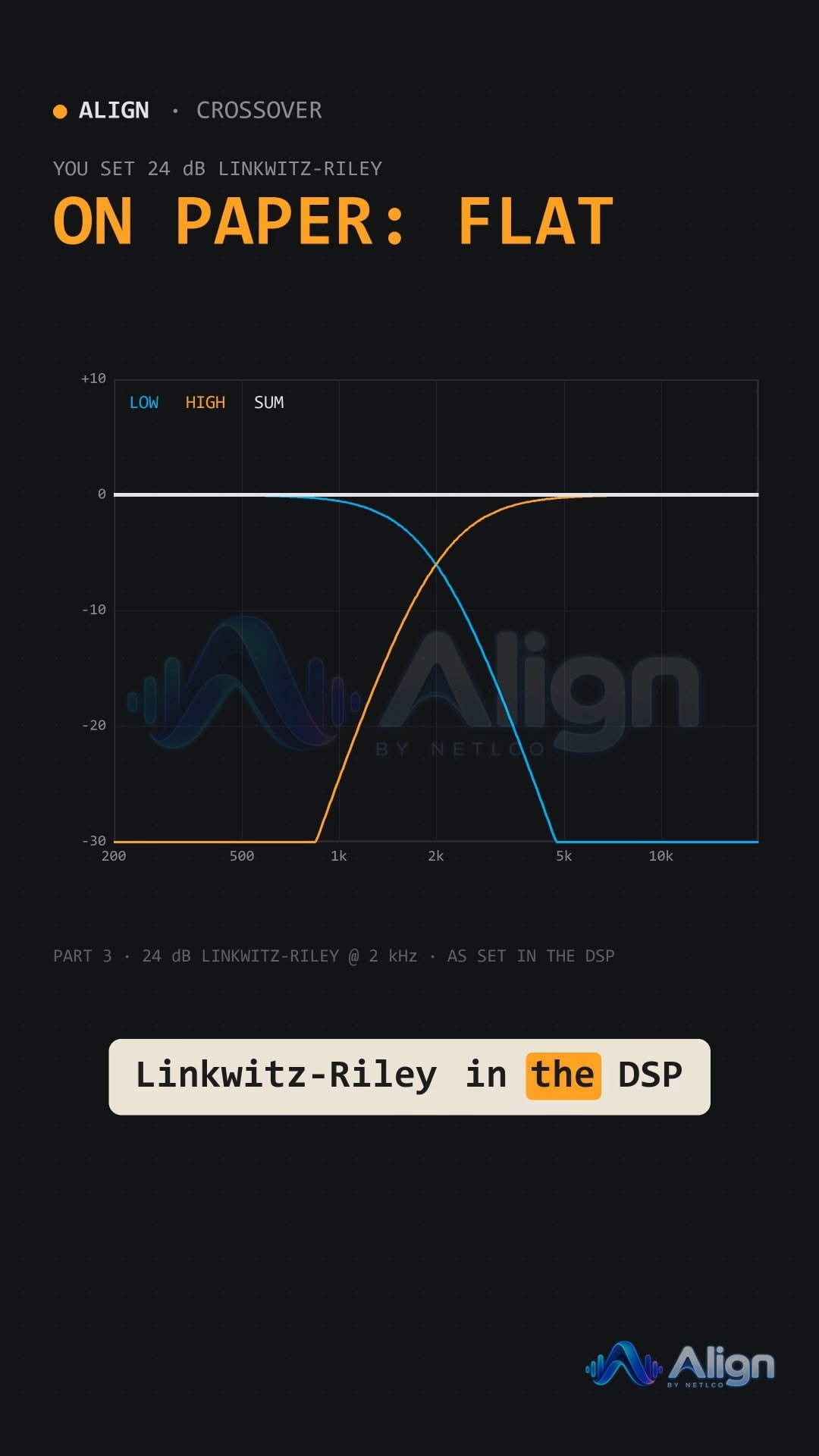 0:46Why does the crossover sum have a hole?A tweeter already rolls off on its own, so its slope adds to the filter: 24 + 12 = 36 dB per octave, and the sum dips about 4 dB at the crossover.