
Digital or analog amp: which one clips worse?
Analog amps (class AB / class H) copy the wave off the supply rails. Class H adds a higher rail for peaks, but the top rail is the wall. Class D switches super fast, and a filter smooths it into a wave.
0:51 video
The working
Both chop the wave flat when pushed too far. Analog rails sag on long, loud passages, so it clips sooner. Class D hits a hard edge. Tubes clip softly; solid-state (analog or digital) clips hard.
Either way, the wave turns square: at the same peak, up to 2× the average power in the voice coil, plus harmonics at 3×, 5× and 7× the frequency going into your tweeters.
The fix: headroom, clean gain structure, no clip light, and a limiter set to the speaker's continuous rating.
Limit your speakers with Align
Disclaimer: this is a general overview. How an amp clips can vary with its design and technology (supply type, built-in limiters/DSP, protection circuits), so check your amp's manual and specs.
Notes: "up to 2×" = average (mean-square) power of a fully clipped sine vs a clean sine with the same peak. 3×, 5×, 7× = odd harmonics of a square wave (symmetric clipping). "Super fast" = class D switching is typically a few hundred kHz.
More questions
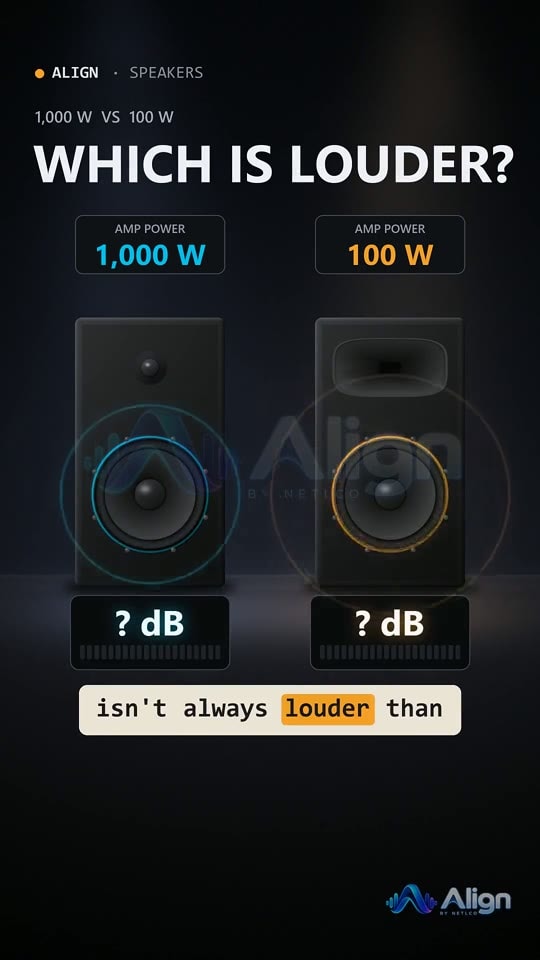 0:55Is a 1,000 W speaker louder than a 100 W one?Not always. Watts tell you how much power a speaker can take, not how loud it gets. Loudness comes from sensitivity: how loud it plays with 1 watt, measured at 1 metre.
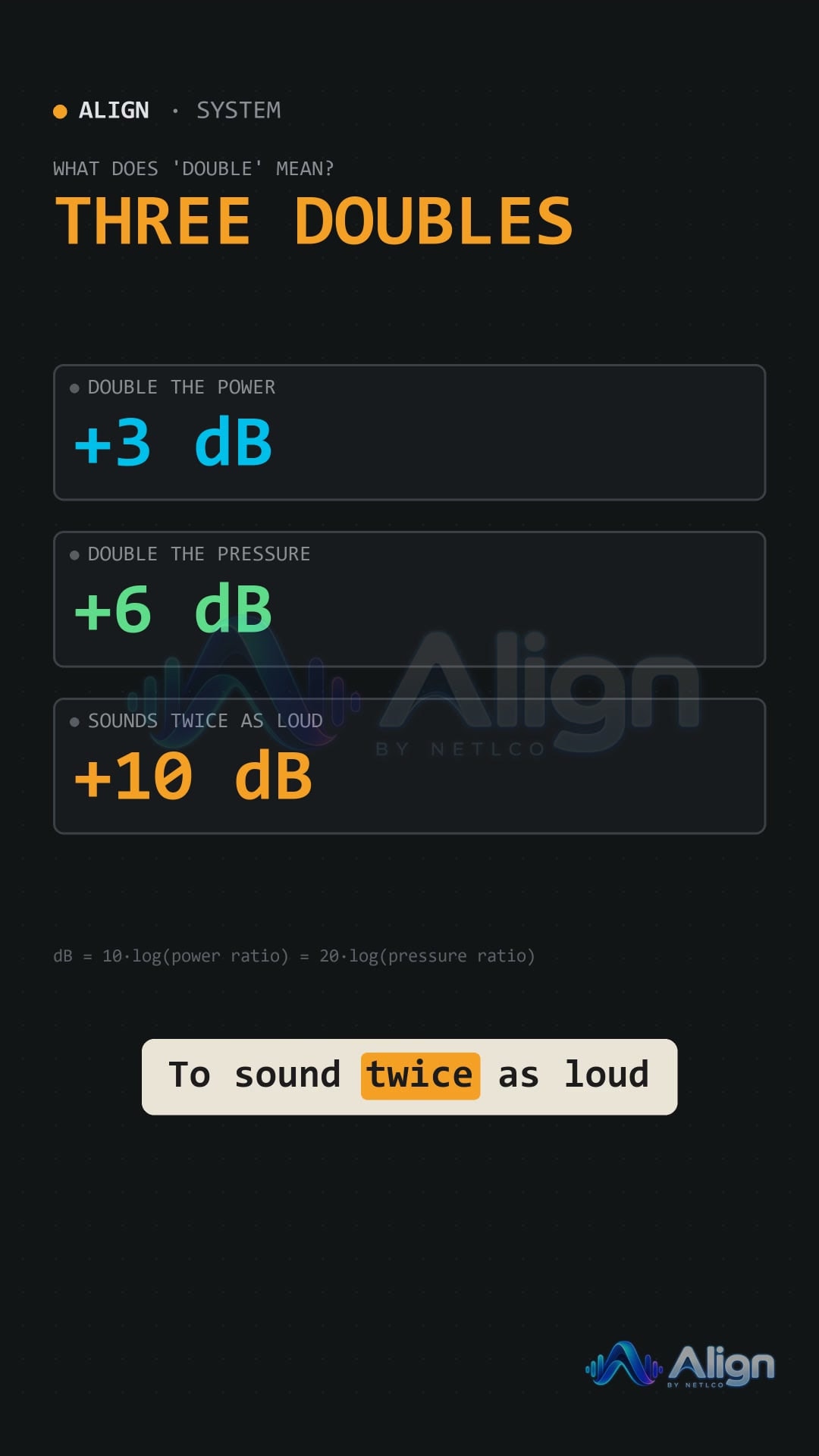 0:50Want it twice as loud?Bigger amp, or more speakers? Double the power = +3 dB. Double the pressure = +6 dB. To actually sound twice as loud you need about +10 dB.
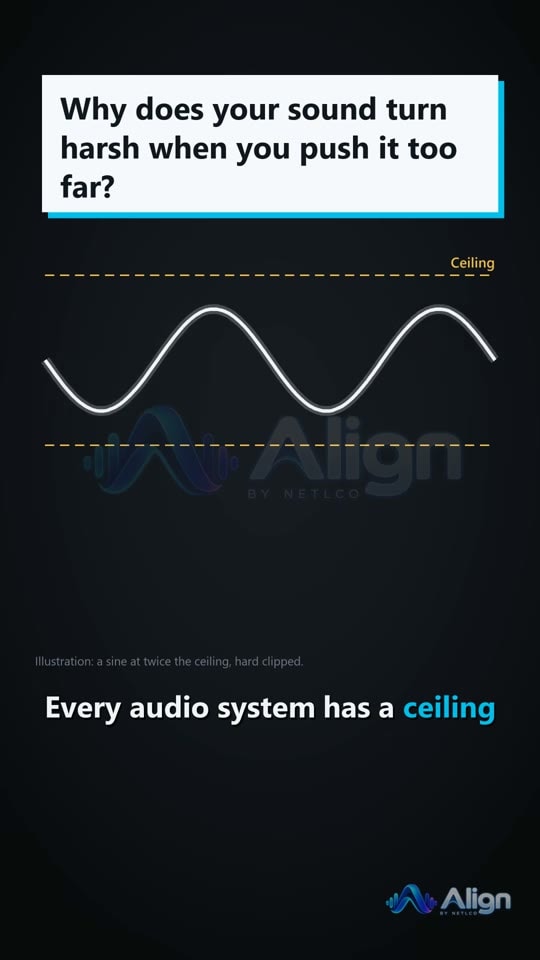 0:26Why does your sound turn harsh when you push it?Every system has a ceiling. Push past it and the tops of the wave get chopped flat. That is clipping, and those flat tops add harmonics that were never in the music.
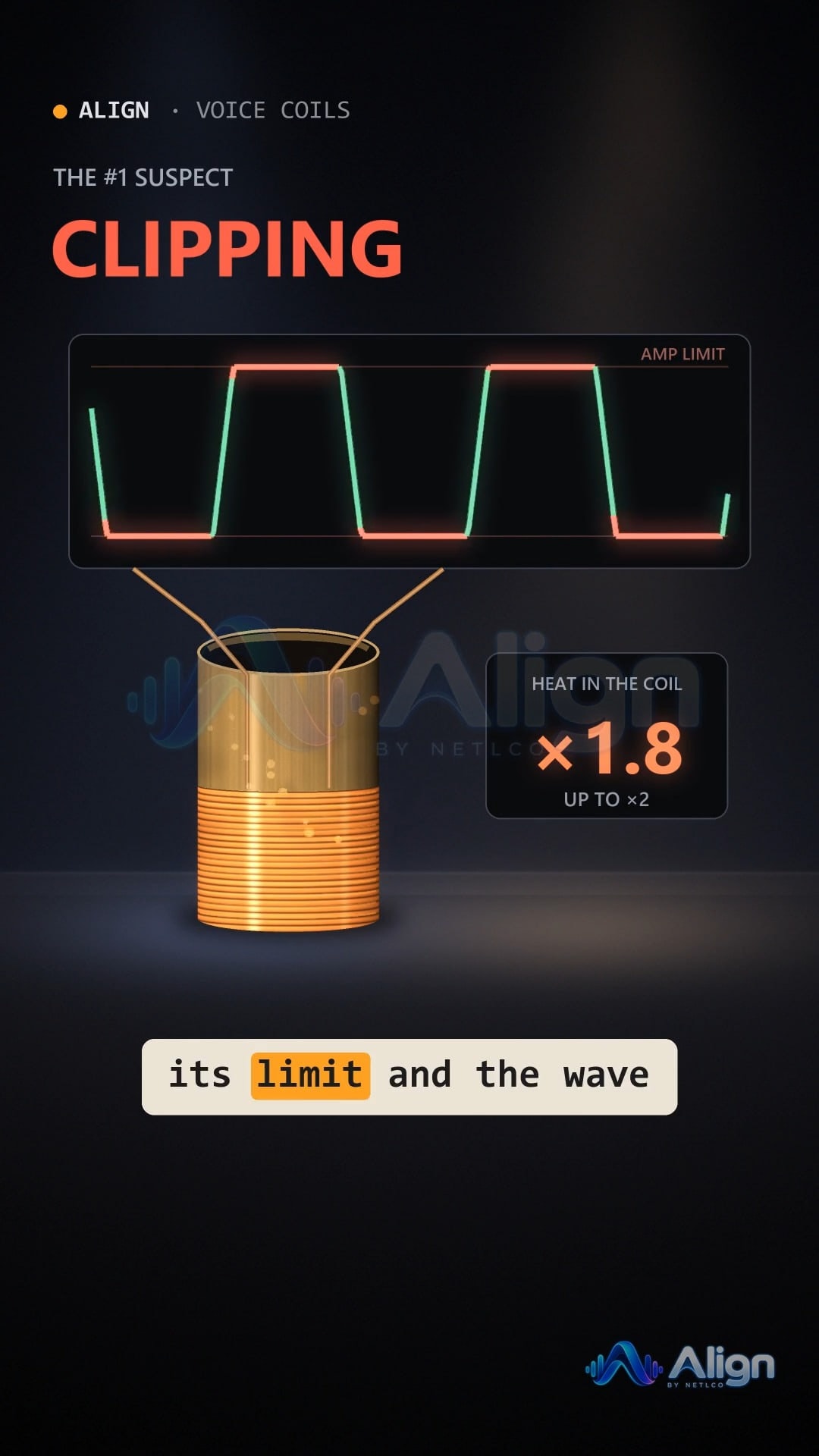 1:21What does a burnt voice coil tell you?Over 95% of the power you send a woofer becomes heat, not sound, and that heat lands in the coil.