
Why does the crossover sum have a hole?
A tweeter already rolls off on its own, so its slope adds to the filter: 24 + 12 = 36 dB per octave, and the sum dips about 4 dB at the crossover.
0:46 video
The working
The fix: measure what actually comes out, then set the filter so the result hits the target. In this example a 12 dB filter plus the driver's own 12 dB gives a true acoustic 24 dB Linkwitz-Riley. Tune what comes out of the box, not the number on the screen.
Sources: Linkwitz-Riley / Butterworth filter maths. Driver roll-off is an illustration.
More questions
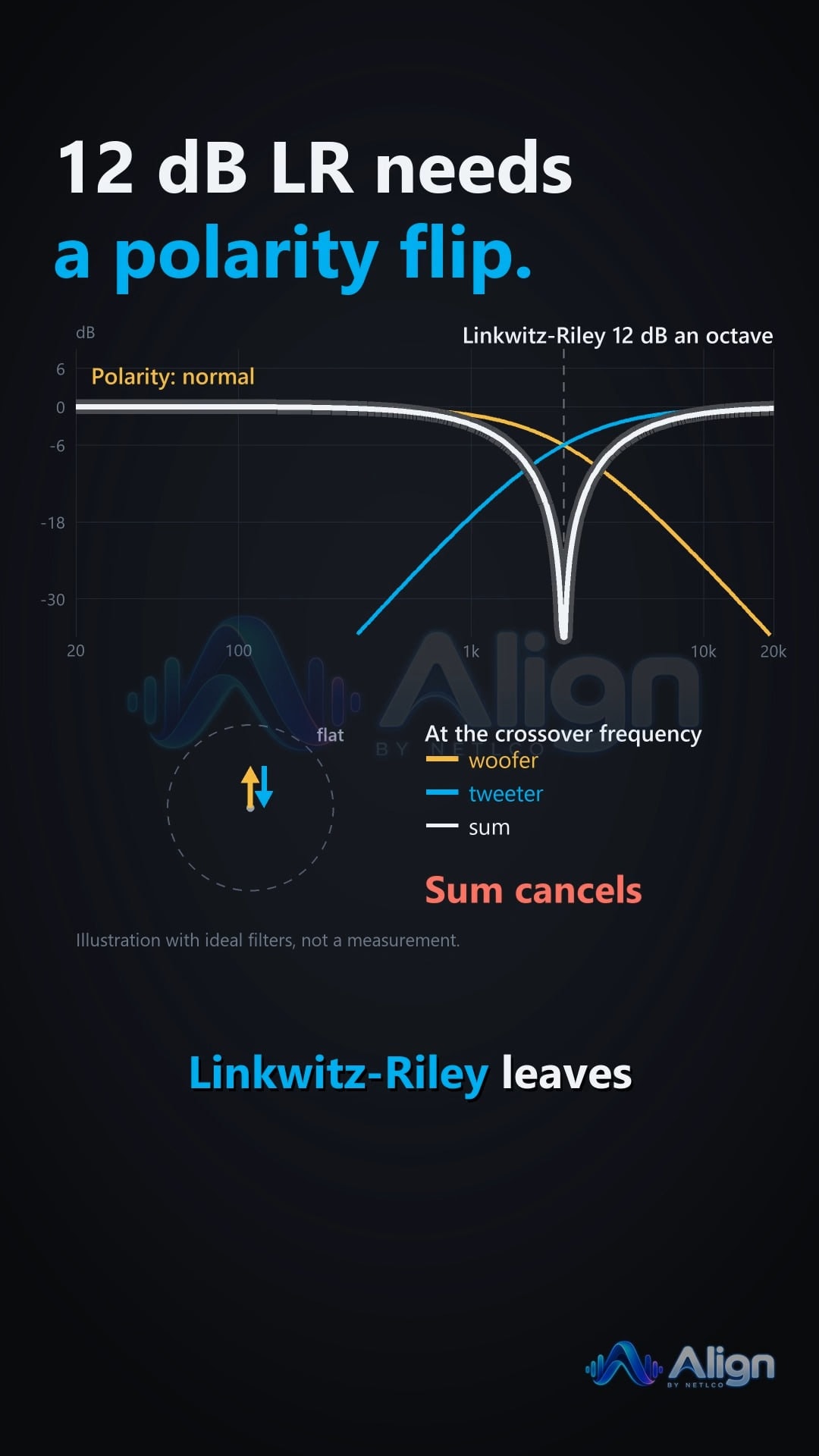 0:52Butterworth or Linkwitz-Riley: which crossover sums flat?Linkwitz-Riley. A 24 dB Linkwitz-Riley is 6 dB down at the crossover, so the two sides sum flat; a 24 dB Butterworth is 3 dB down, so the sum bumps up about 3 dB.
 0:40Why is there a hole in the sound where the woofer and tweeter meet?A crossover splits the signal: lows to the woofer, highs to the tweeter. Around the crossover frequency, both play at once.
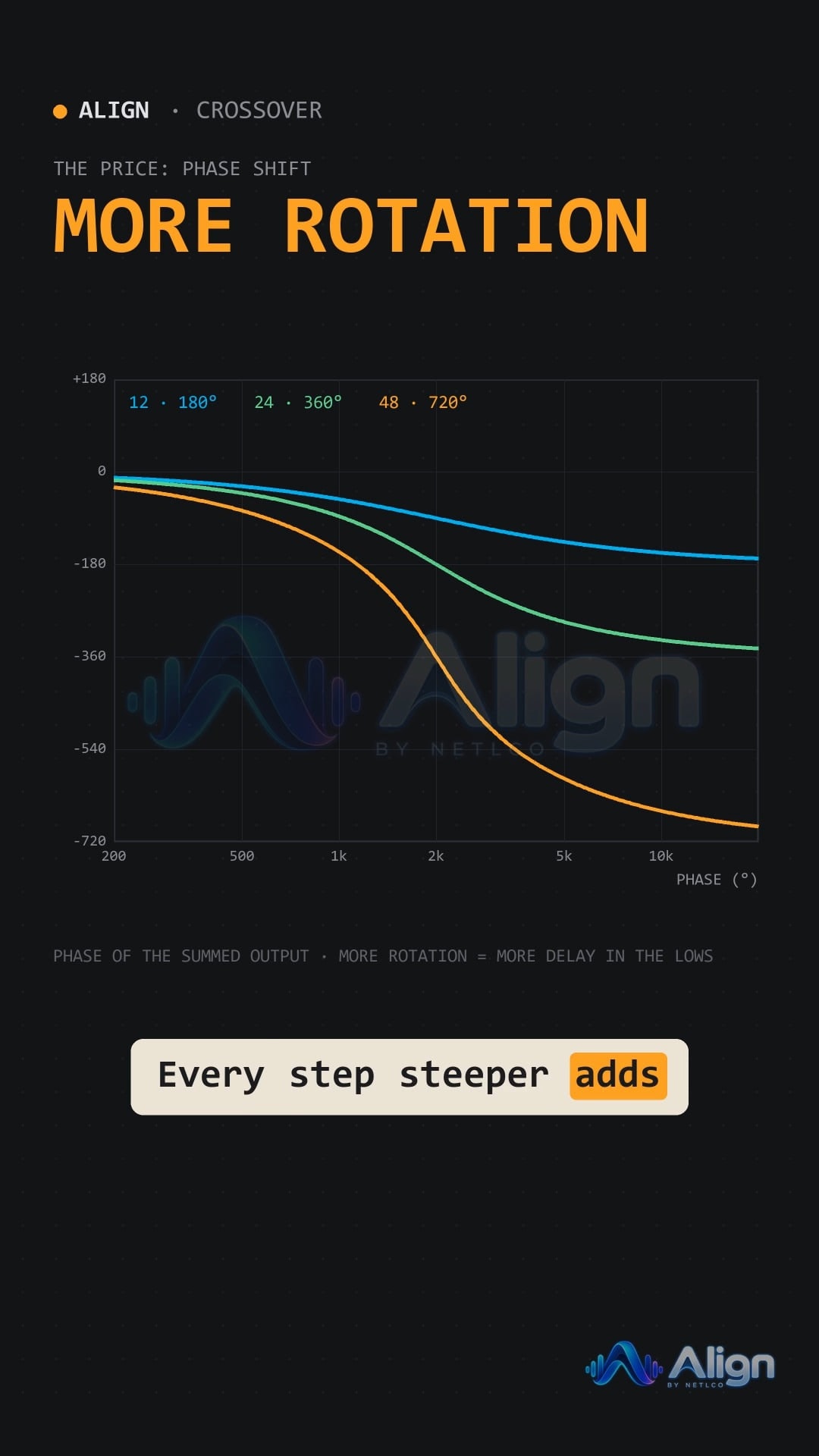 0:50Which crossover slope: 12, 24 or 48 dB per octave?Steeper protects the tweeter. One octave below a 2 kHz crossover, the tweeter is down 14 dB at 12 dB/oct, 25 dB at 24, and 48 dB at 48. Steeper also shortens the zone where both drivers play together.
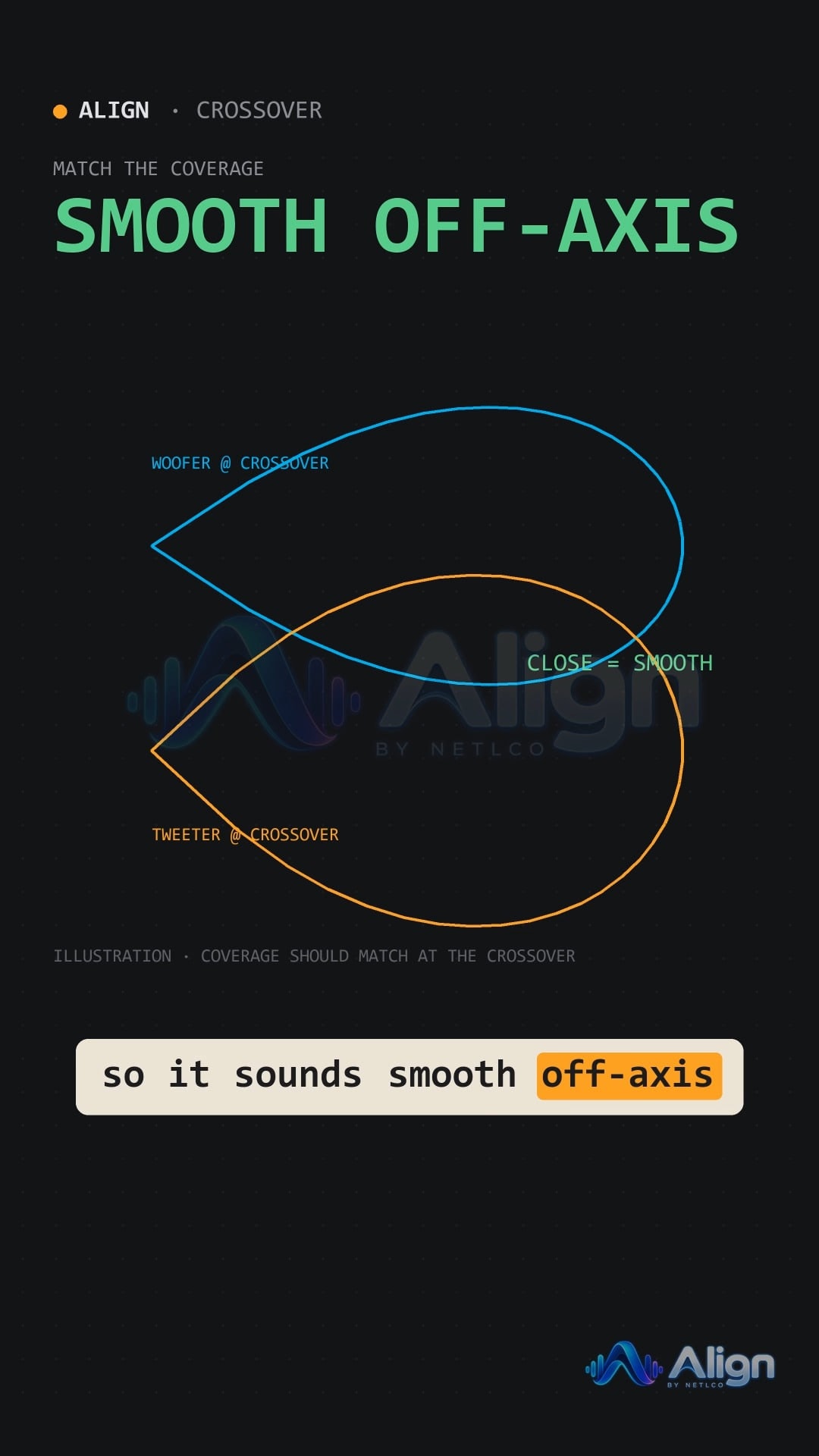 0:47Where should you cross your tops: 1, 2 or 3 kHz?Tweeters hate low notes. A common rule of thumb: cross at least twice the tweeter's resonance (Fs). For a 900 Hz tweeter, that's 1.8 kHz.