
Why does a mix sound different at another volume?
In 1933, Harvey Fletcher and Wilden Munson at Bell Labs played tones to listeners on headphones and asked: what sounds as loud as 1 kHz? That loudness match is measured in phons: 40 phon means as loud as a 1 kHz tone at 40 dB.
0:51 video
The working
Plot the matches and you get the famous family of curves. Quiet, they climb steeply in the lows and at the very top. Loud, they flatten out.
So a mix balanced quiet sounds bass-heavy when you turn it up, and a mix balanced loud sounds thin when you turn it down. That's why old hi-fi had a "loudness" button: it boosted the bass at low volume.
The 1933 curves were later re-measured with more listeners and loudspeakers. Today's standard is ISO 226, latest edition 2023.
Know what level you're really mixing at: check it with Align's SPL meter.
Sources: Fletcher & Munson, "Loudness, Its Definition, Measurement and Calculation", Bell System Technical Journal, Oct 1933. Curves drawn from ISO 226:2023 equal-loudness contours, pure tones (20 to 100 phon). "Boomy/thin" and loudness-button graphs: illustrations.
More questions
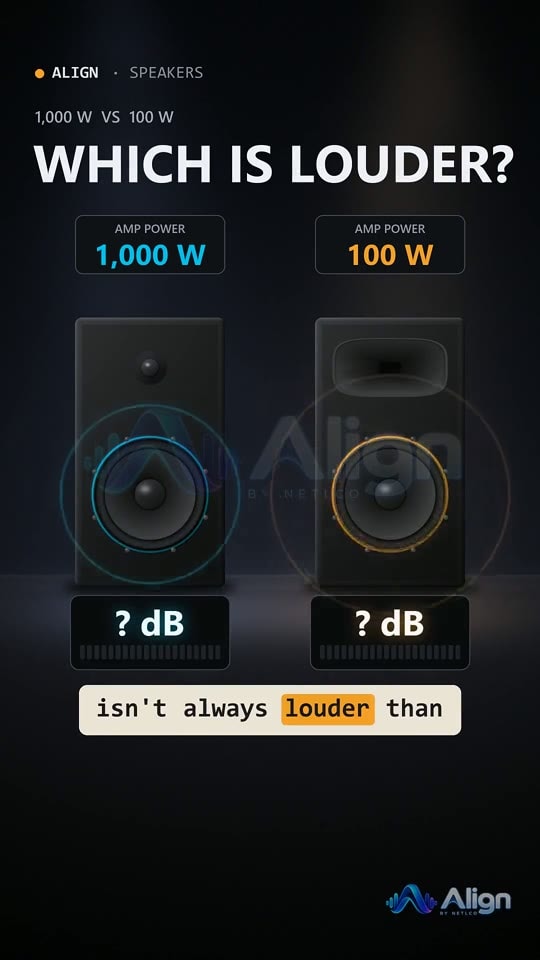 0:55Is a 1,000 W speaker louder than a 100 W one?Not always. Watts tell you how much power a speaker can take, not how loud it gets. Loudness comes from sensitivity: how loud it plays with 1 watt, measured at 1 metre.
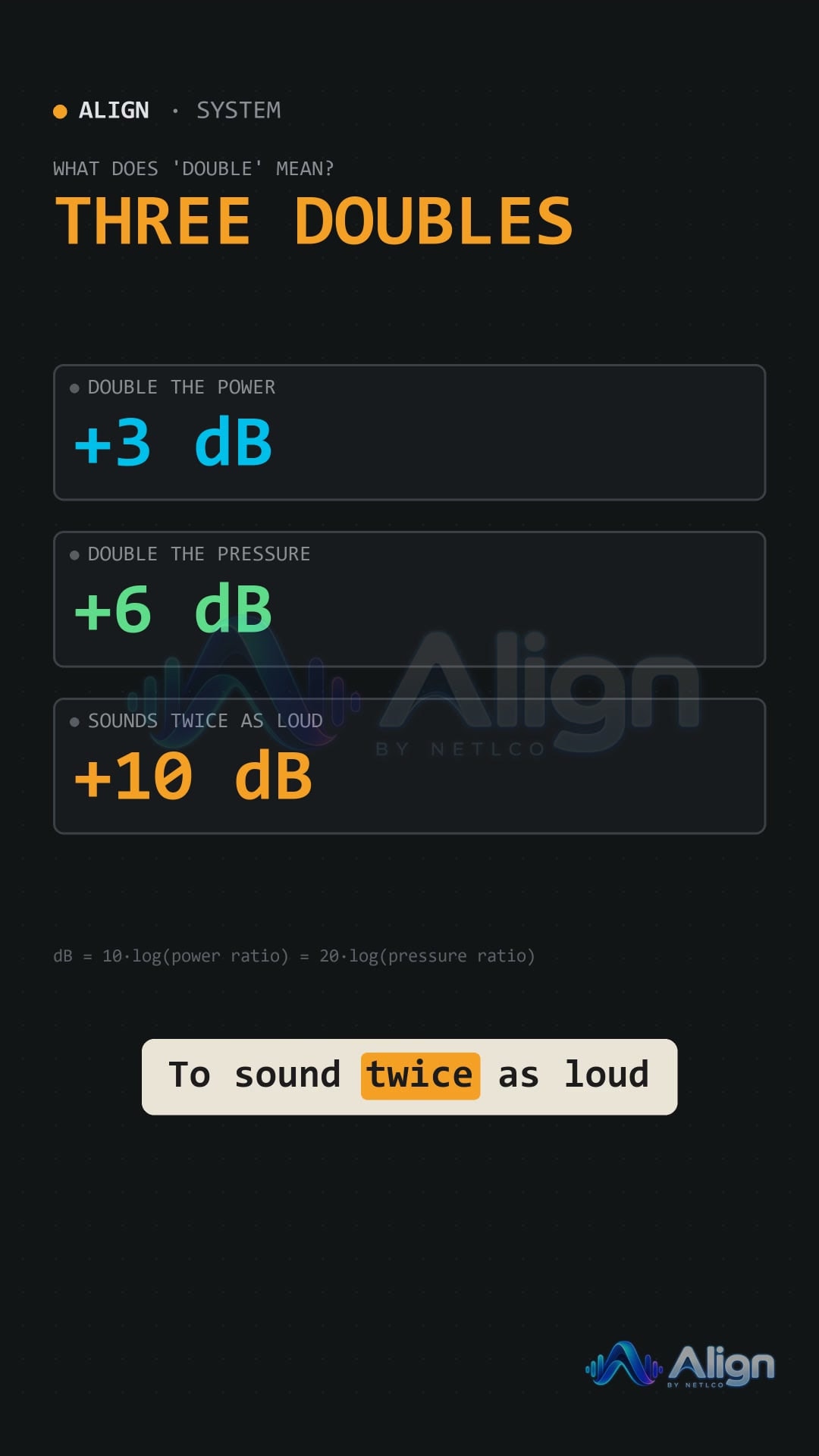 0:50Want it twice as loud?Bigger amp, or more speakers? Double the power = +3 dB. Double the pressure = +6 dB. To actually sound twice as loud you need about +10 dB.
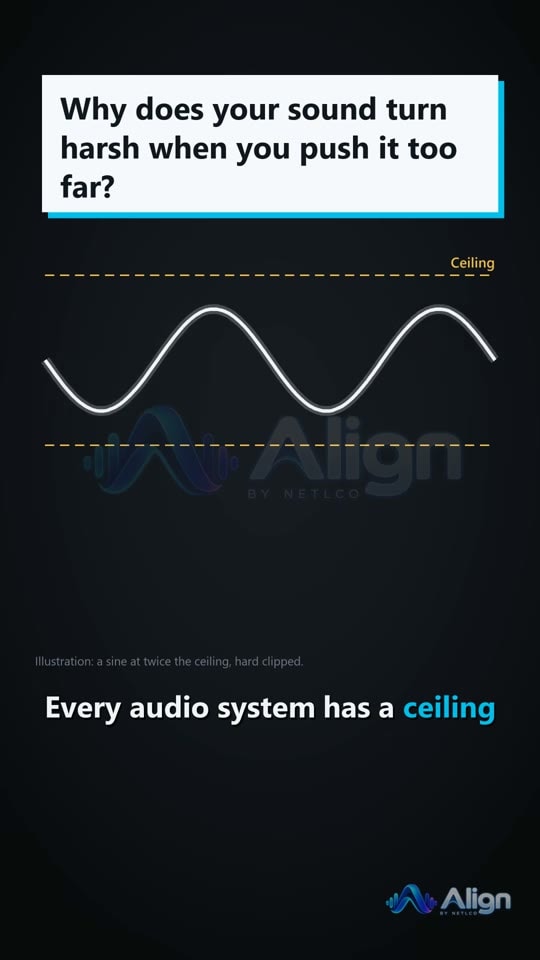 0:26Why does your sound turn harsh when you push it?Every system has a ceiling. Push past it and the tops of the wave get chopped flat. That is clipping, and those flat tops add harmonics that were never in the music.
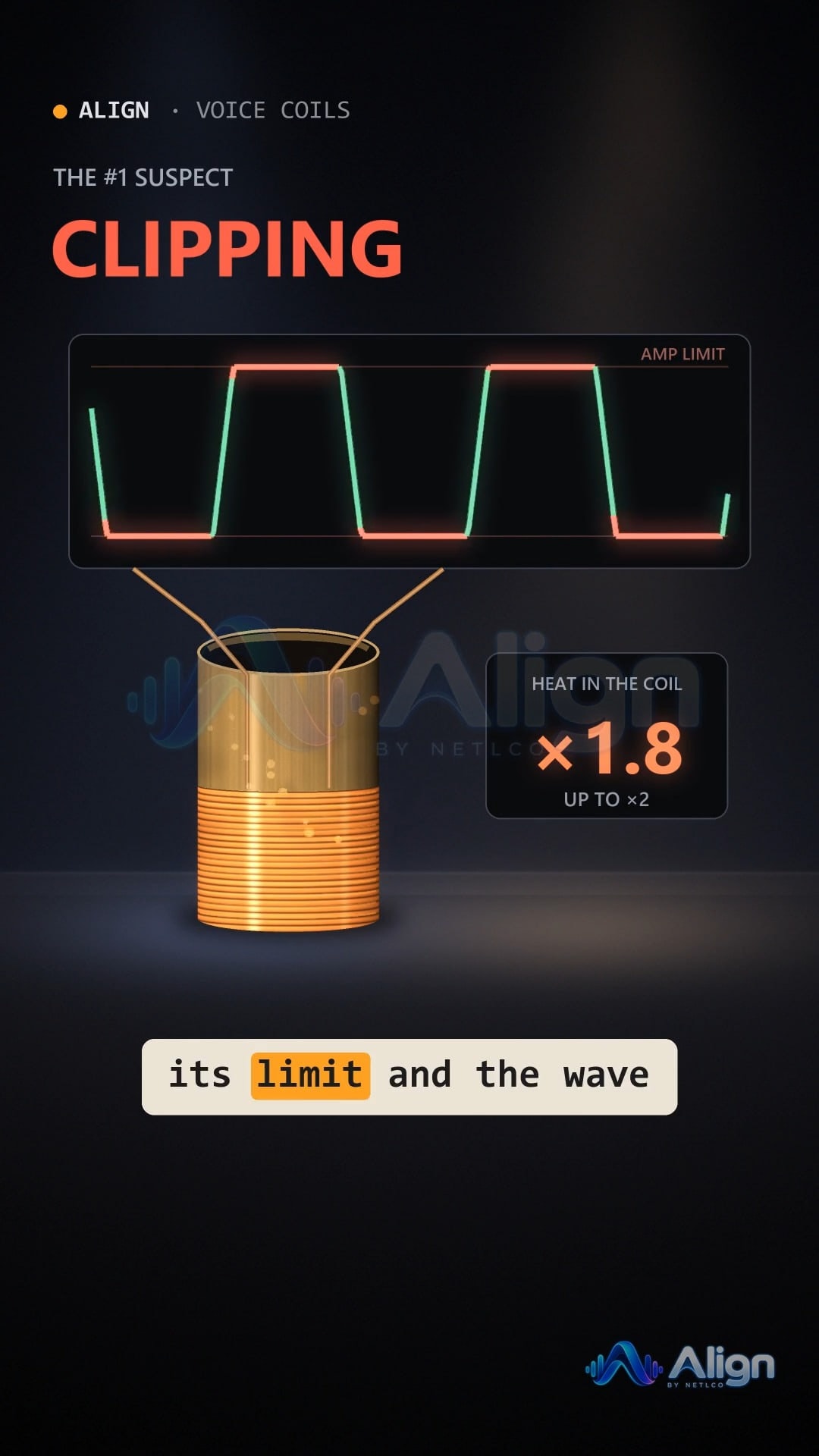 1:21What does a burnt voice coil tell you?Over 95% of the power you send a woofer becomes heat, not sound, and that heat lands in the coil.