
Why does your delay tower drift as the night cools down?
Your delay towers were perfect at soundcheck. So why are they off tonight? Sound slows down as the air cools.
0:30 video
The working
Main stack to a delay tower 60 m (197 ft) away, time for the sound to arrive:
Soundcheck, 31 °C (88 °F) → 171.63 ms
Late show, 26 °C (79 °F) → 173.06 ms
Before dawn, 22.7 °C (73 °F) → 174.02 ms
Soundcheck to late show, the main now lands 1.4 ms after the tower. Where both are equally loud, that 1.4 ms cancels near 350 Hz and leaves a hole in the lower mids.
Check your delay times again before the headliner. Measure the main and the tower with Align and set the delay to what the air is doing now:
Notes: speed of sound changes with air temperature (about 0.6 m/s per °C). Delay = distance ÷ speed of sound. First cancel = 1 ÷ (2 × time offset). Wind and humidity also play a part. Picture is an illustration.
More questions
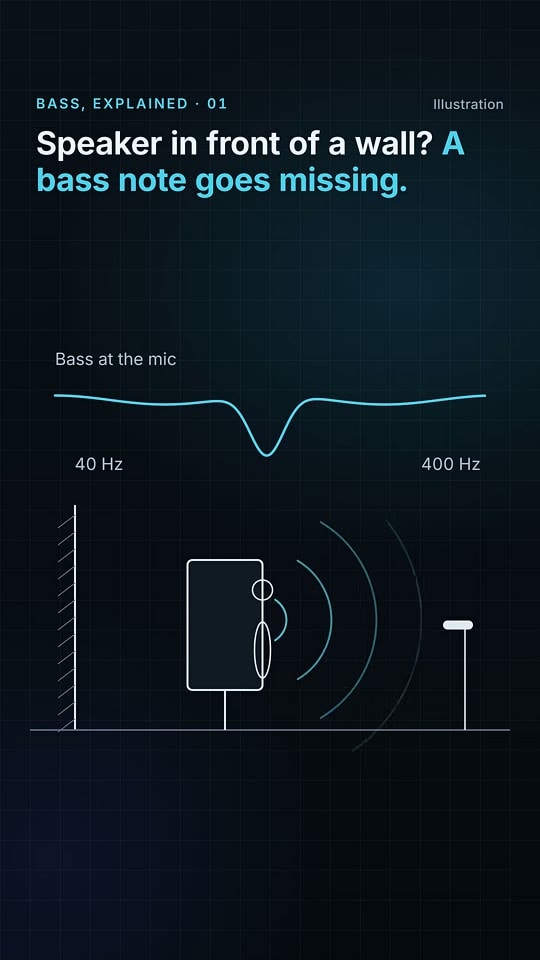 0:54Speaker in front of a wall: why can’t EQ fill the bass hole?Bass bounces off the wall and comes back half a wave late, which cancels one note. Boosting it boosts the reflection too, so the hole stays. Move the speaker or treat the wall.
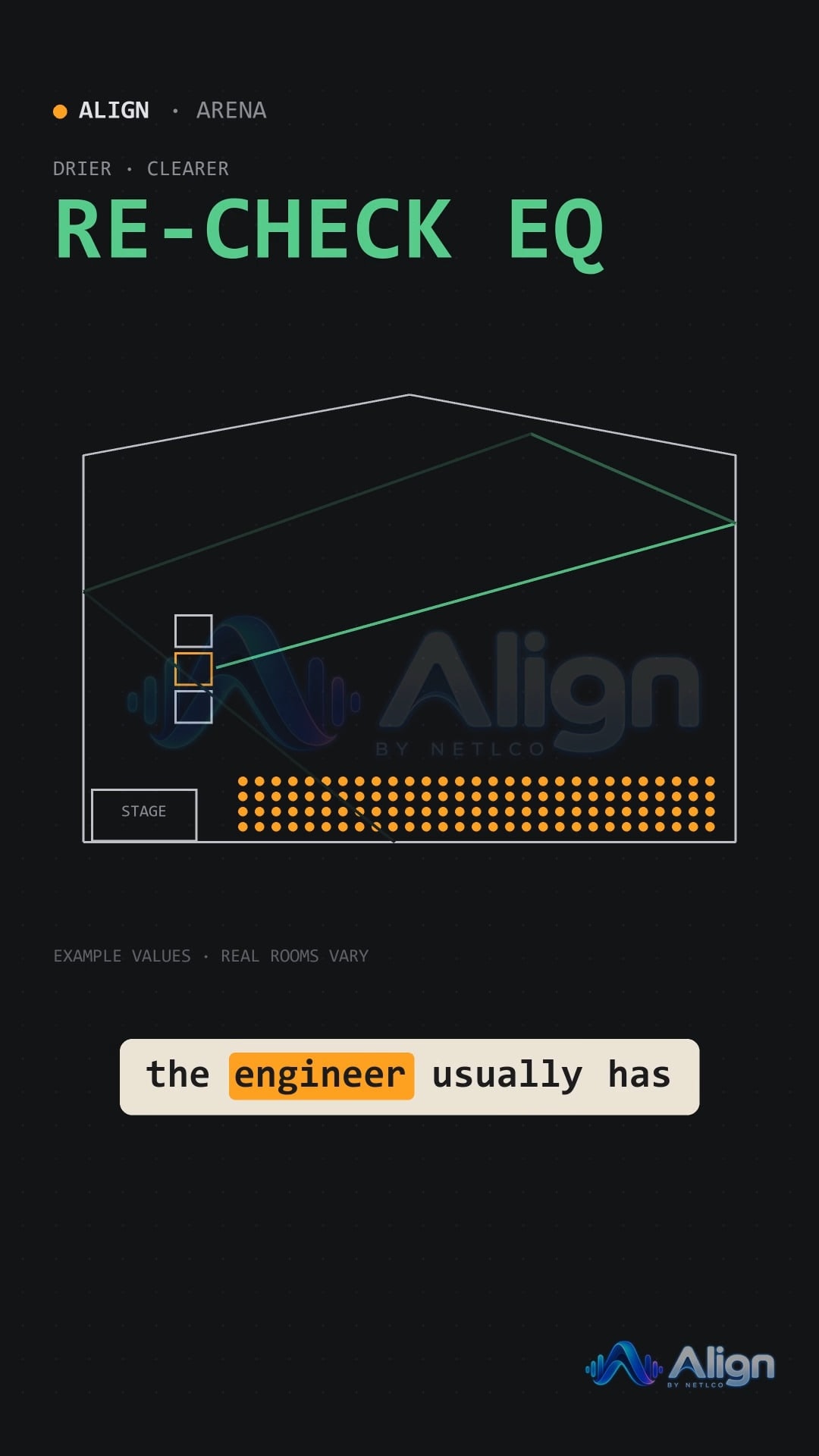 0:41Why does a concert sound different at soundcheck than once the crowd shows up?An empty arena is hard floors and seats, so sound bounces around and the room keeps ringing. Fill it with people and every body soaks up sound, especially the mids and highs.
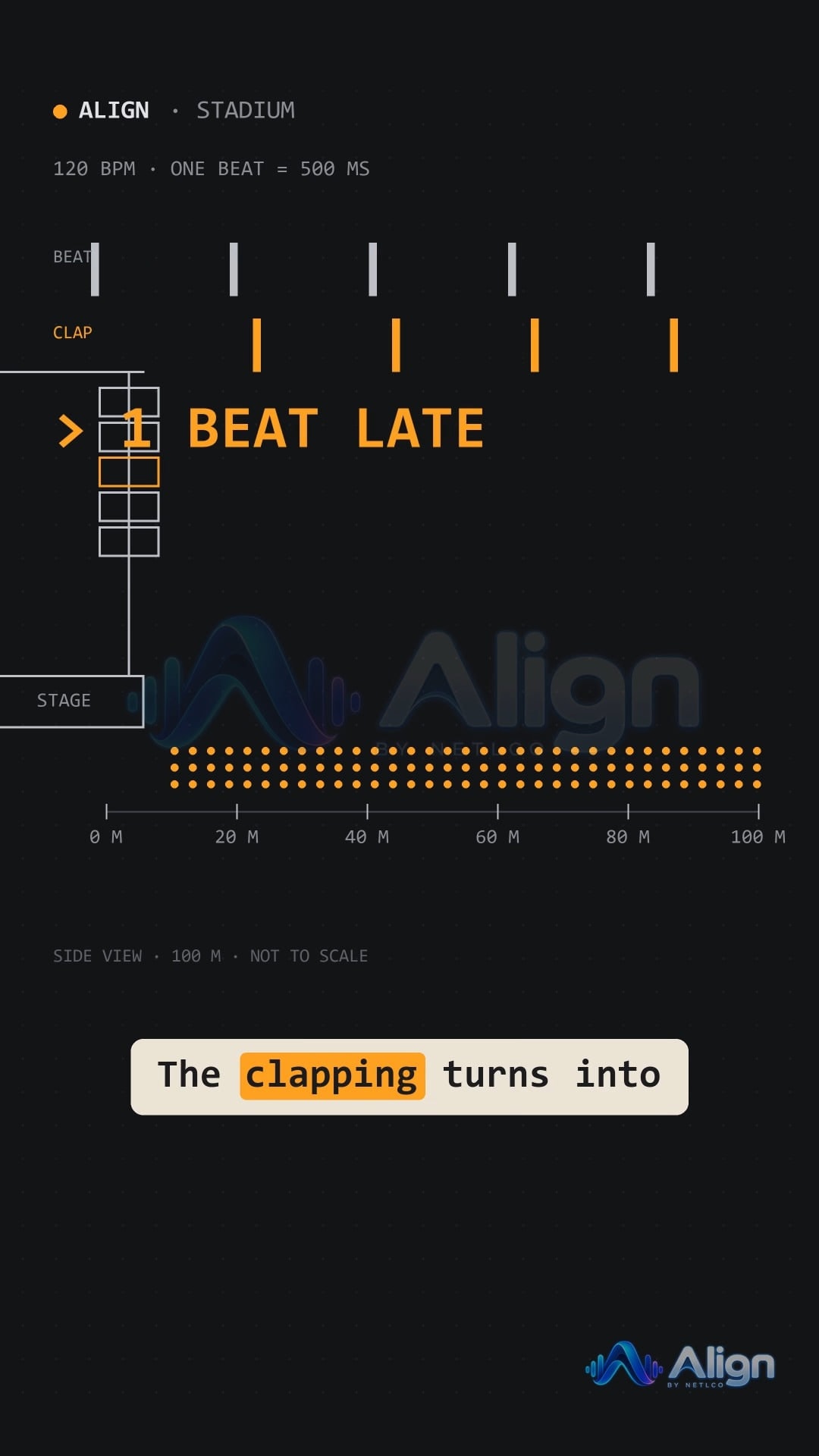 0:47Why can't a stadium crowd clap in time?It's not the crowd's fault. Sound covers about 3 ms per metre. Someone 100 m back hears the beat about 290 ms late. They clap right on it, but their clap needs another 290 ms to travel back to the front.
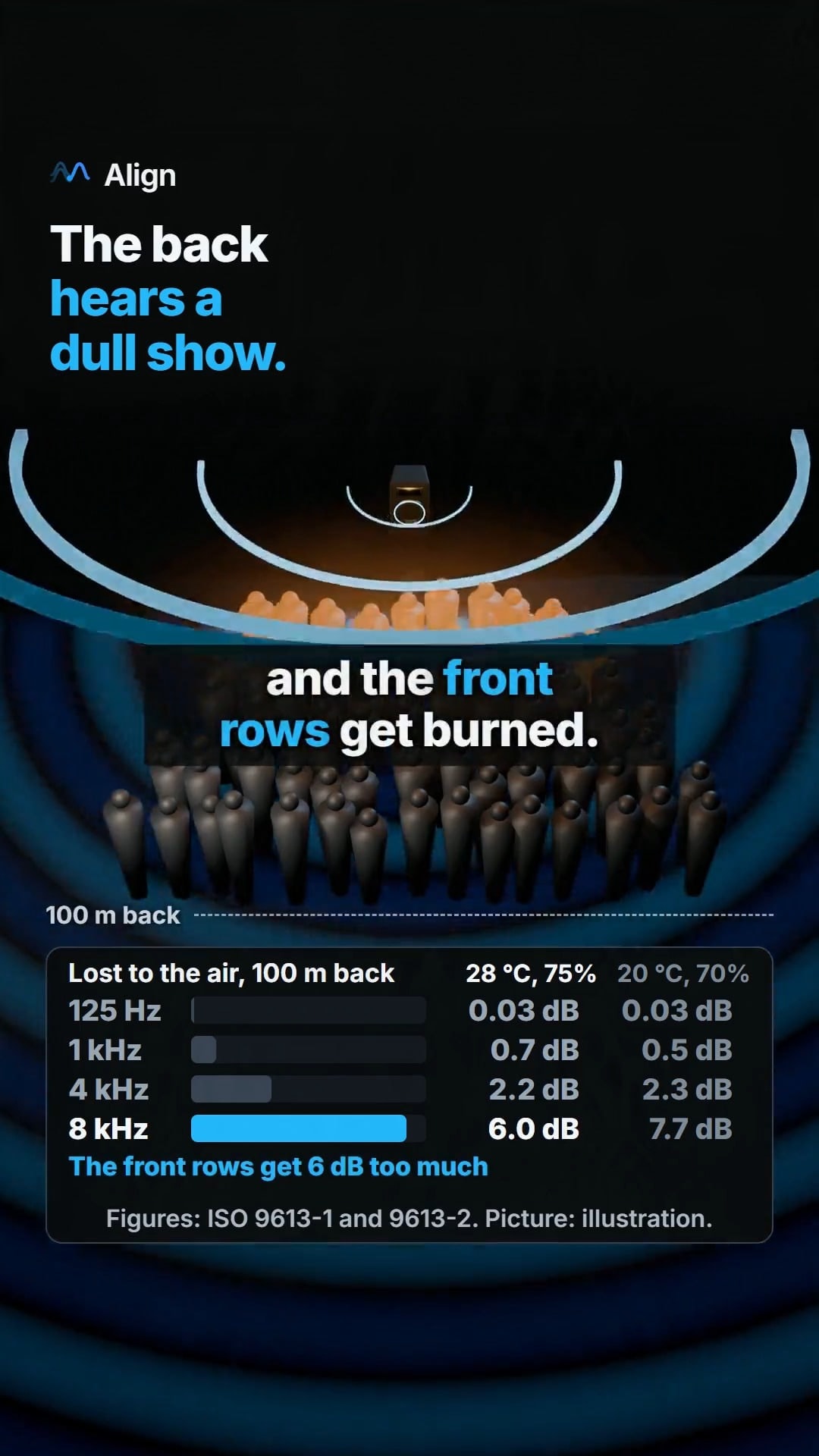 0:34Why does the back of the crowd hear a dull show?Air soaks up the highs. 100 m back, in warm air (28 °C, 75% humidity), 8 kHz loses about 6 dB, while 1 kHz loses under 1 dB. That's on top of the normal drop with distance.