
Does an 18 inch sub give more bass than a 15?
Not always. Bass is moving air, and how much air depends on two things: the cone’s size and how far it moves, its Xmax.
1:05 video
The working
The 18 inch driver in the video has a third more cone area (1,140 cm² against 855 cm²), but it moves only 6.1 mm each way. The 15 inch moves 13.5 mm.
So the 15 inch moves about 1.7 times the air: about 4 dB more bass, once both cones reach their limit.
Going lower costs more: every octave down needs four times the movement for the same level, which is why the deepest notes run out first.
A ported box helps. Near the port’s tuning the port does most of the work and the cone barely moves. Below the tuning the cone moves freely with almost nothing holding it back, so set a high-pass filter just below the tuning.
This compares the drivers only, not finished cabinets. Box size, port design, horn or bandpass loading, room gain, placement and stacking all change real output a lot, and makers measure Xmax differently, so compare spec sheets with care.
More questions
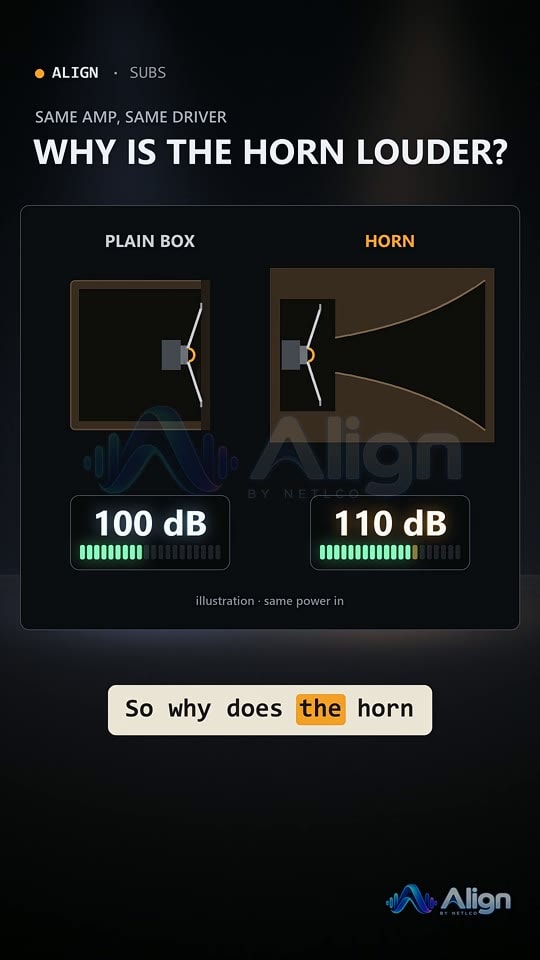 0:58Same amp, same driver: why does the horn sub play louder?A horn matches the cone to the air. A cone in a plain box turns only about 1% of the amp’s power into sound; the horn makes more of the cone’s movement into sound.
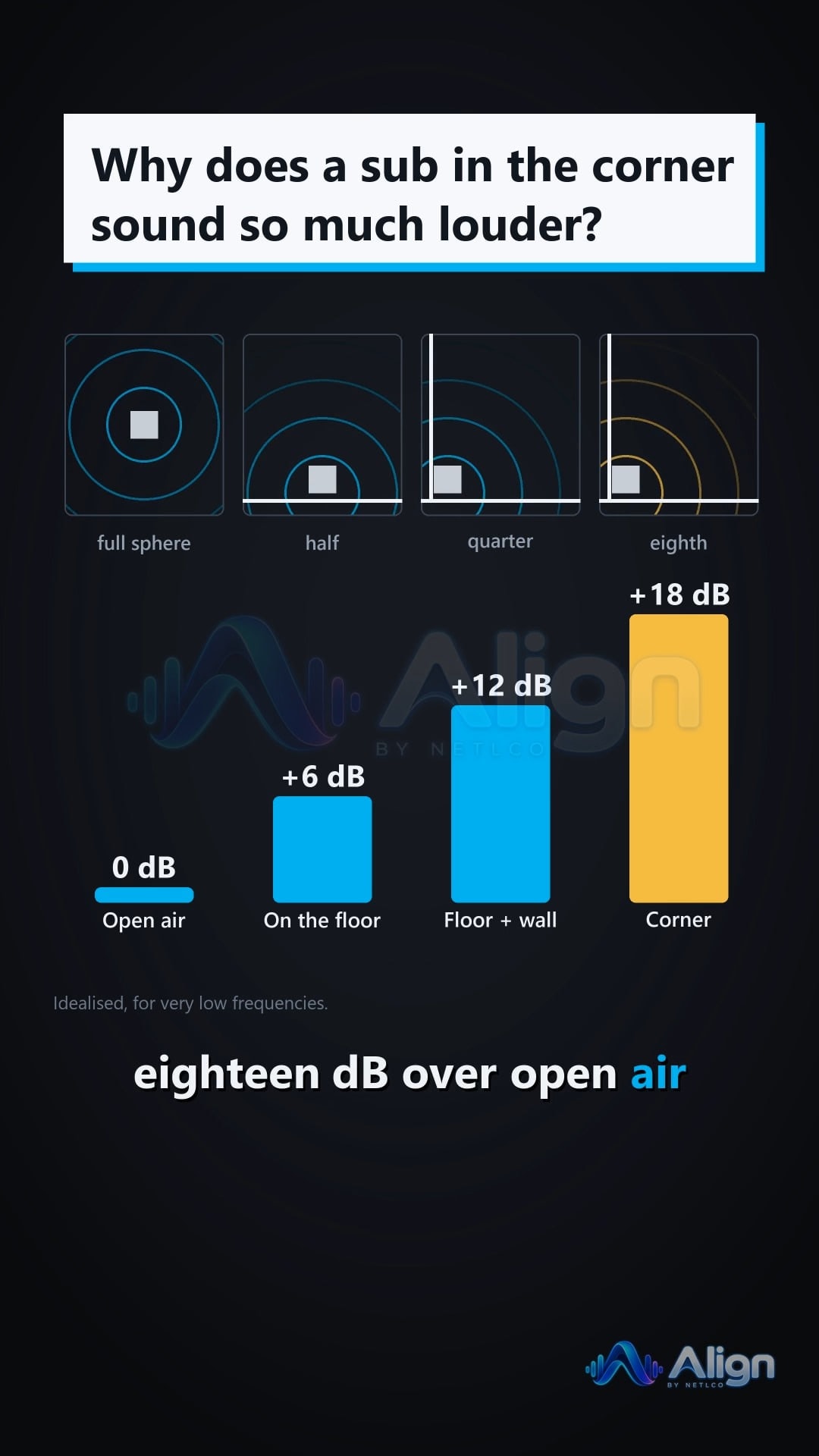 0:31Why does a sub in the corner sound so much louder?Each surface beside it adds about 6 dB: the floor, then a wall, then the corner, up to about 18 dB over open air.
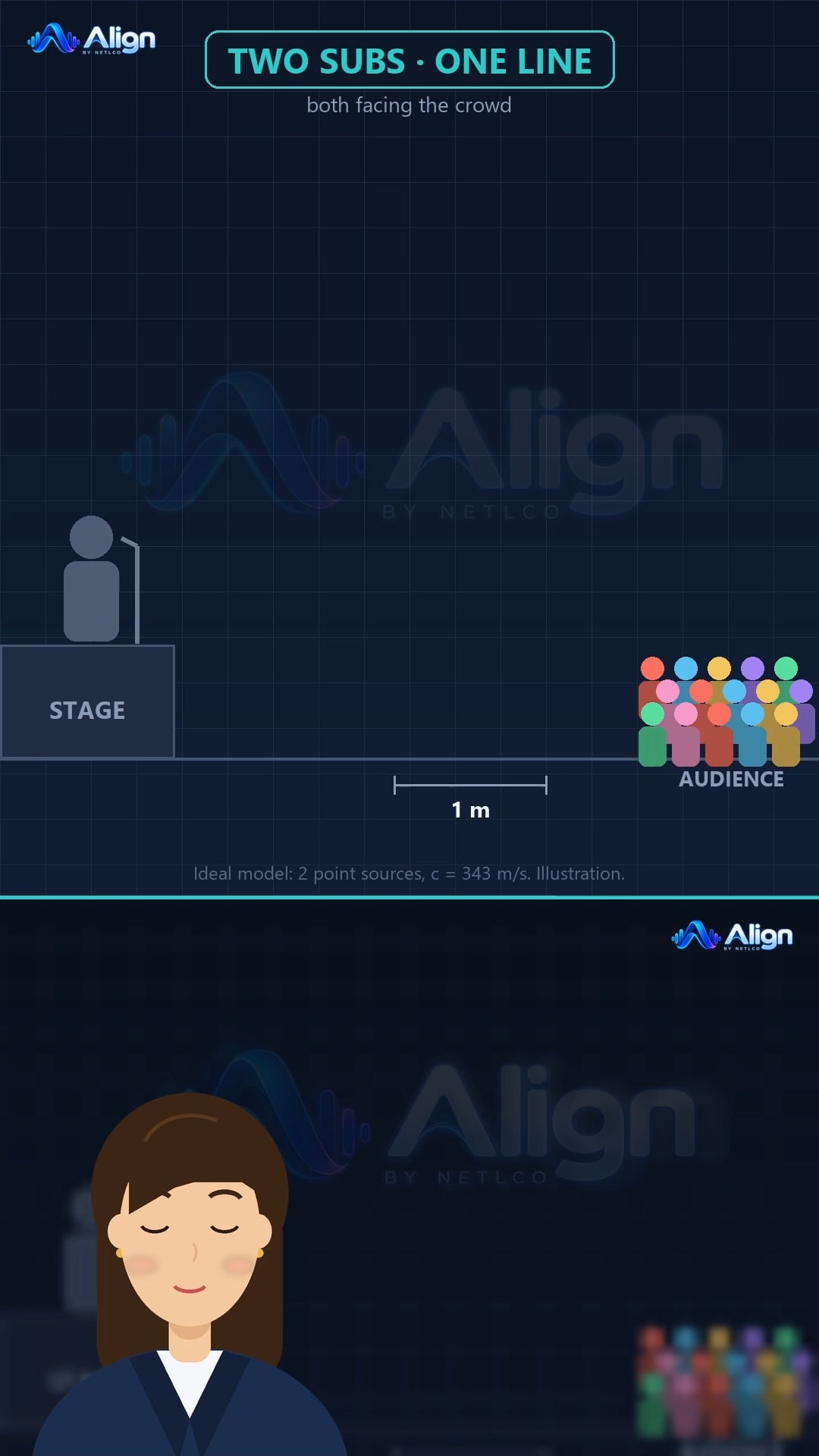 0:59Two subs facing the crowd: output first or cancellation first?Most bass in front? Output first. A quiet stage? Cancellation first.
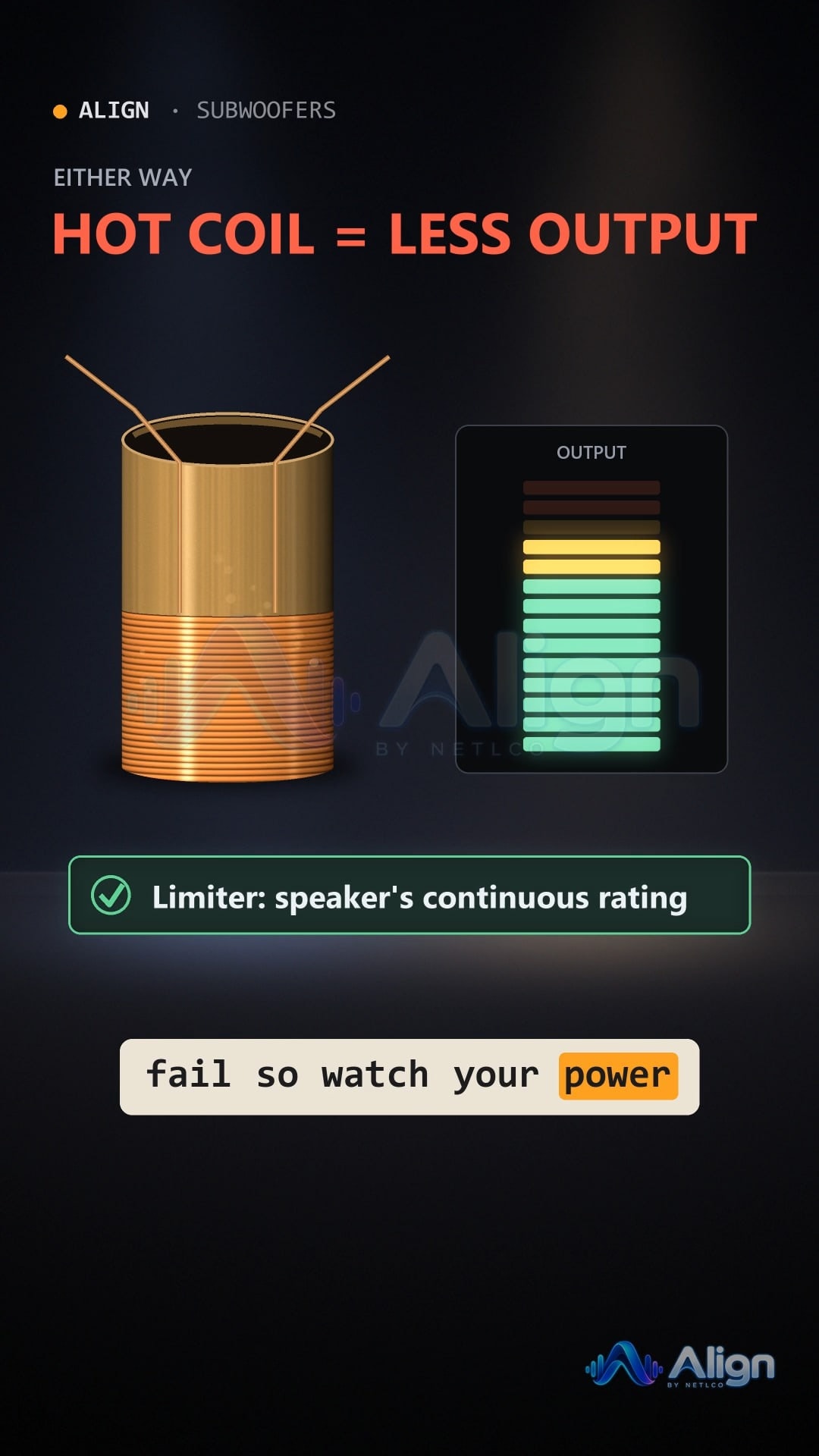 0:46Neodymium subs or ferrite subs: is neo really worth the money?Neodymium packs far more magnetic strength for its size, so the motor can be a fraction of the weight. That means lighter boxes, easier to carry, truck and fly.