
Two subs facing the crowd: output first or cancellation first?
Most bass in front? Output first. A quiet stage? Cancellation first.
0:59 video
The working
Delay the front box 2.9 ms, the time sound takes to travel 1 m.
Out front, both waves land together: +6 dB
Behind, they only cancel near 86 Hz
- Cancellation first
Flip the back box's polarity and delay it 2.9 ms.
Behind, the waves meet upside down and cancel
Out front you pay for it: only +3 dB at 43 Hz
Move the sub and the spacing tunes the frequency (a quarter wavelength):
- 1 m → the hole behind and the full +6 dB in front sit near 86 Hz (delay 2.9 ms)
- 1.43 m → both drop to 60 Hz (delay 4.2 ms)
Quarter wavelength = 343 ÷ 4 ÷ spacing in meters.
Most bass in front? Output first. A quiet stage? Cancellation first.
Measure the front and the back with Align's transfer function. It finds the delay for you. Then plan it in the Sub Map: drag a box and see the coverage change before load-in.
Notes: ideal model, 2 point sources, speed of sound 343 m/s. The hole behind is for output first; the +6 dB point in front is for cancellation first. Real rooms and real boxes limit how deep the cancellation goes. Graphs are illustrations; the Align screens are the real transfer function and Sub Map views.
More questions
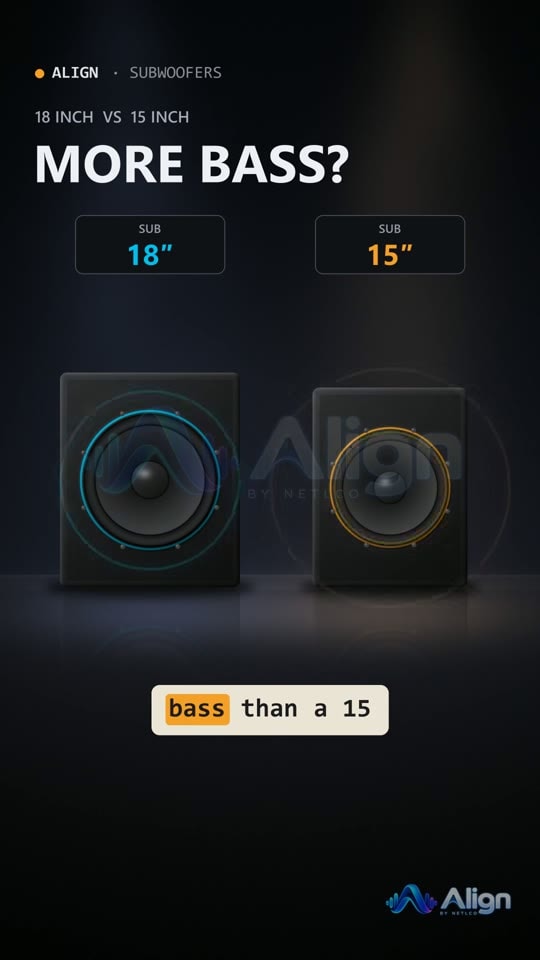 1:05Does an 18 inch sub give more bass than a 15?Not always. Bass is moving air, and how much air depends on two things: the cone’s size and how far it moves, its Xmax.
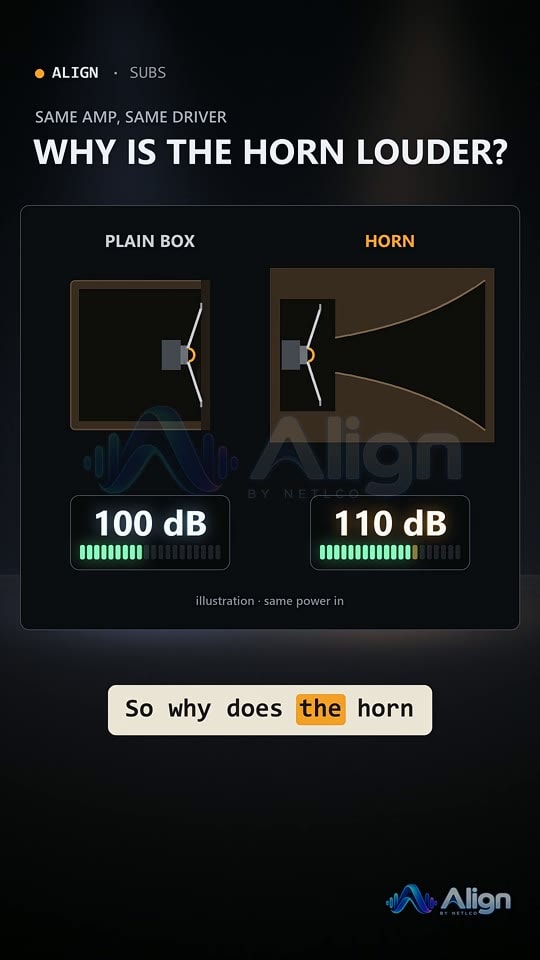 0:58Same amp, same driver: why does the horn sub play louder?A horn matches the cone to the air. A cone in a plain box turns only about 1% of the amp’s power into sound; the horn makes more of the cone’s movement into sound.
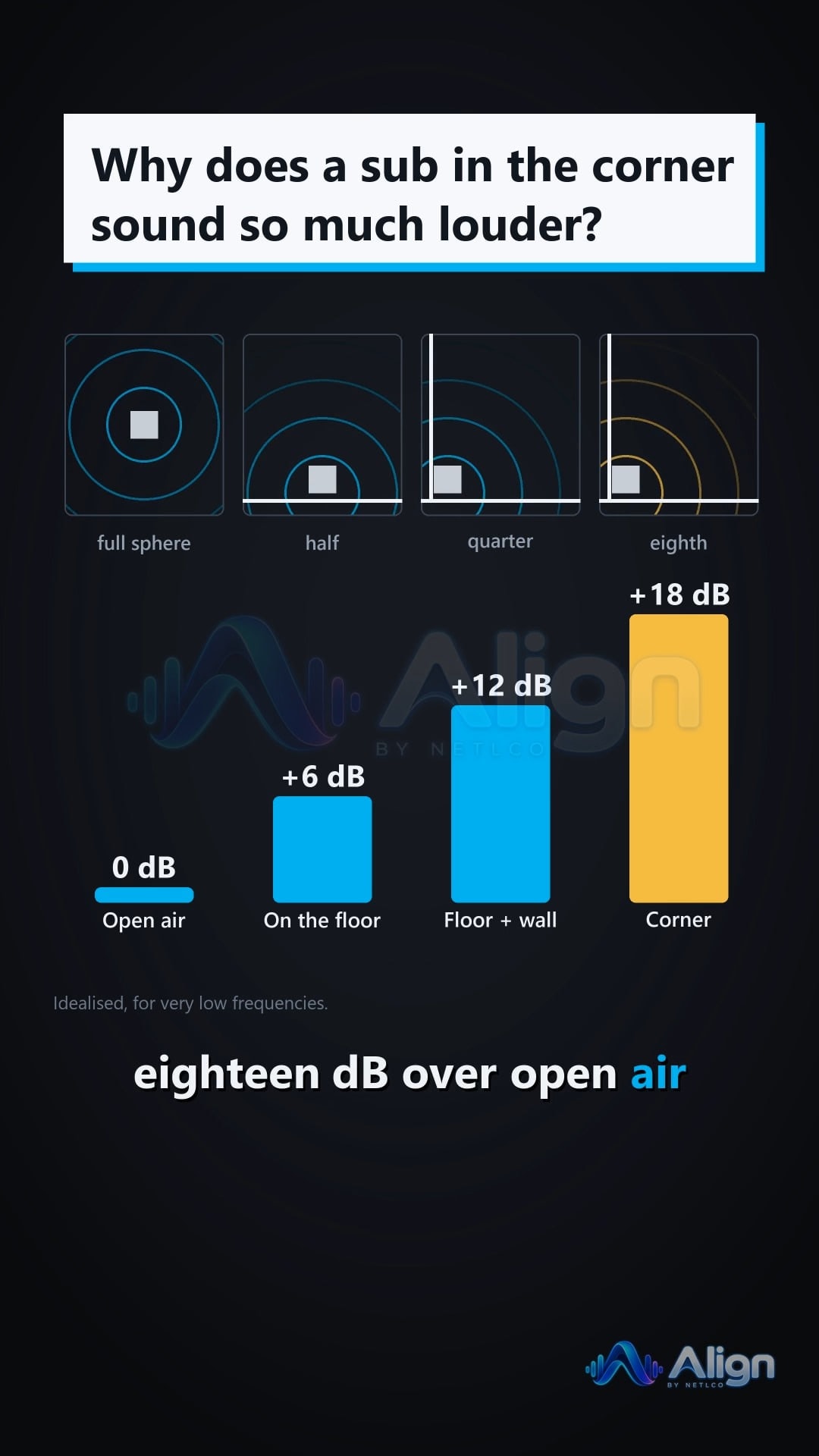 0:31Why does a sub in the corner sound so much louder?Each surface beside it adds about 6 dB: the floor, then a wall, then the corner, up to about 18 dB over open air.
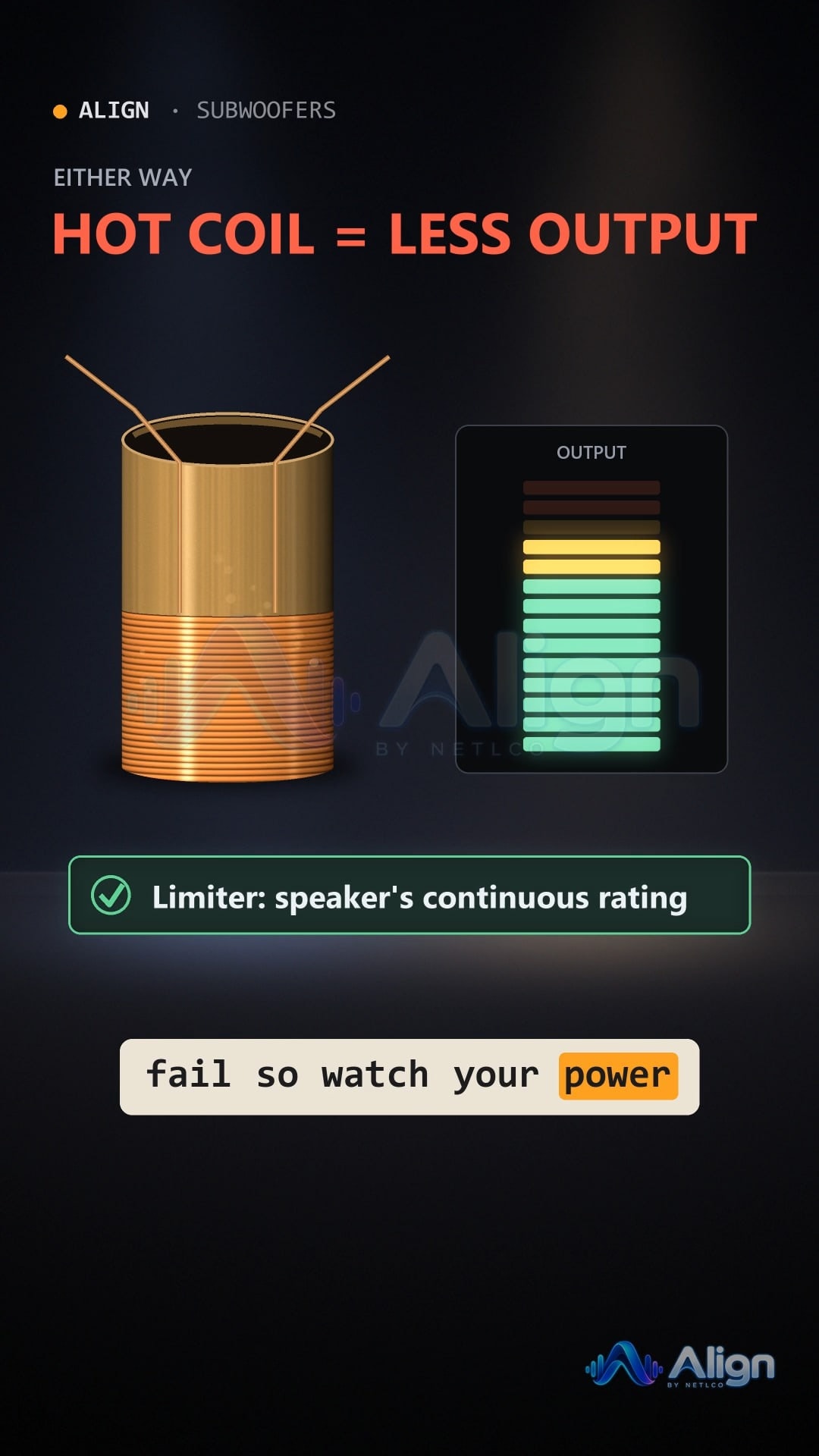 0:46Neodymium subs or ferrite subs: is neo really worth the money?Neodymium packs far more magnetic strength for its size, so the motor can be a fraction of the weight. That means lighter boxes, easier to carry, truck and fly.