
Same amp, same driver: why does the horn sub play louder?
A horn matches the cone to the air. A cone in a plain box turns only about 1% of the amp’s power into sound; the horn makes more of the cone’s movement into sound.
0:58 video
The working
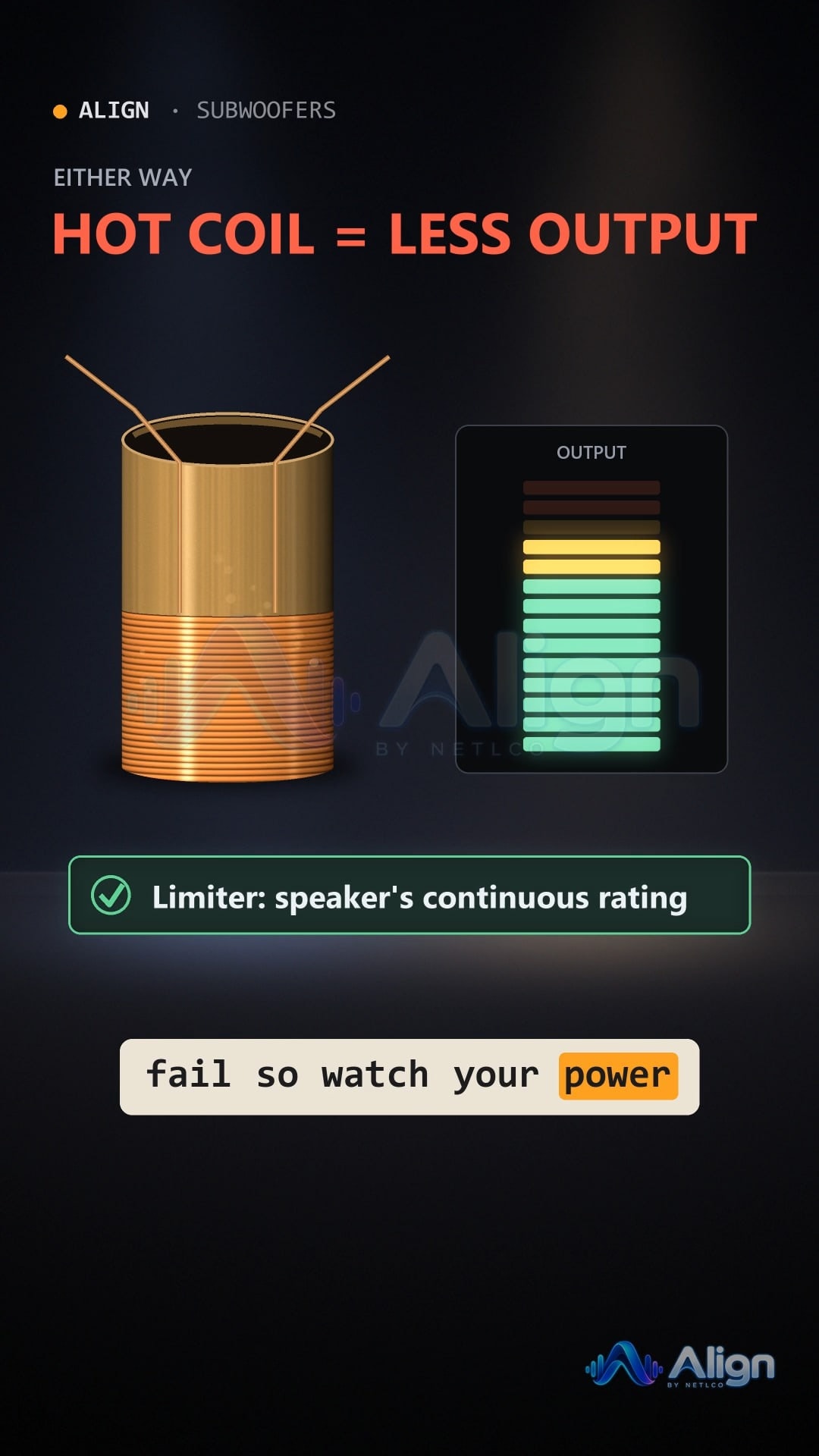
A cone in a plain box moves a lot, but much of that push just sloshes the air around it. The rest of the power is heat in the voice coil.
A horn’s narrow throat makes the cone push against a column of air, like dropping into the right gear. That is acoustic loading.
Every 10 dB of sensitivity is ten times the efficiency: 92 dB is about 1%, 102 dB about 10%. The cone moves less for the same level, so there is less distortion too.
The catch: to go low, a horn has to be long, so subs fold it up inside the box.
These are typical figures, and real boxes vary. Efficiency is about 10^((sensitivity minus 112) divided by 10), at 1 W and 1 m.
More questions
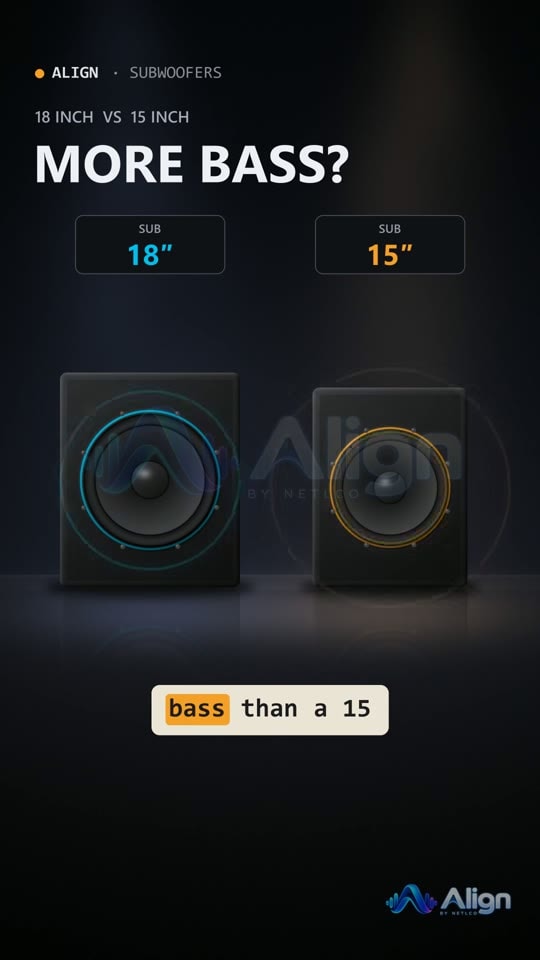 1:05Does an 18 inch sub give more bass than a 15?Not always. Bass is moving air, and how much air depends on two things: the cone’s size and how far it moves, its Xmax.
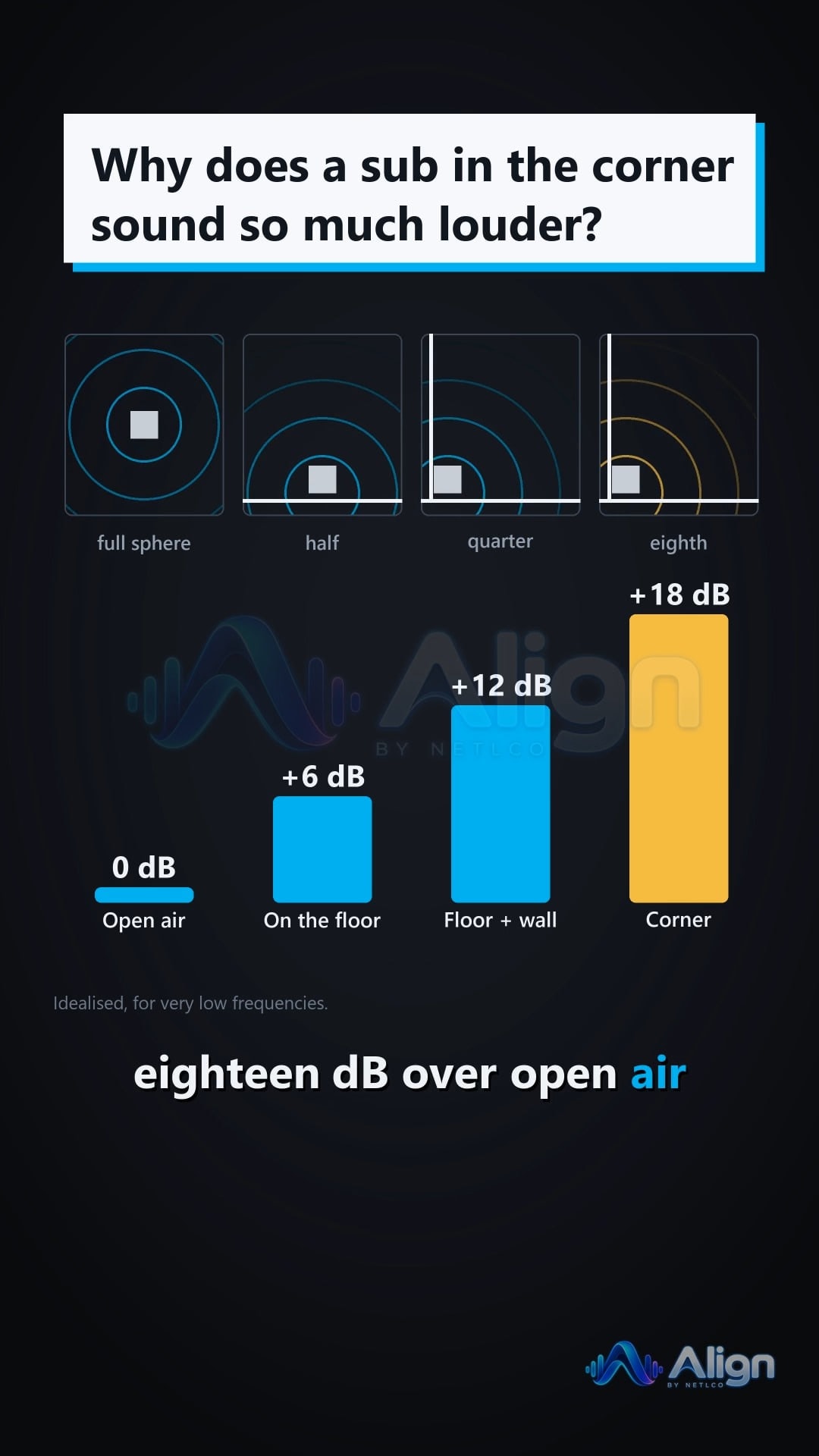 0:31Why does a sub in the corner sound so much louder?Each surface beside it adds about 6 dB: the floor, then a wall, then the corner, up to about 18 dB over open air.
 0:59Two subs facing the crowd: output first or cancellation first?Most bass in front? Output first. A quiet stage? Cancellation first.
 0:46Neodymium subs or ferrite subs: is neo really worth the money?Neodymium packs far more magnetic strength for its size, so the motor can be a fraction of the weight. That means lighter boxes, easier to carry, truck and fly.