
Stack two speakers and the bass jumps up, so why don't the highs get the same boost?
In the bass a wave is metres long (3.4 m at 100 Hz). Two boxes side by side act like one source and add: up to +6 dB.
0:42 video
The working
Up top a wave is only centimetres long (8.6 cm at 4 kHz). Now the gap between boxes matters: the highs add in some spots and cancel in others. On average they only gain about +3 dB, and they get uneven.
That's why big arrays are carefully designed, not just piled up.
Sources: two-source interference model (boxes 0.5 m apart, idealised).
More questions
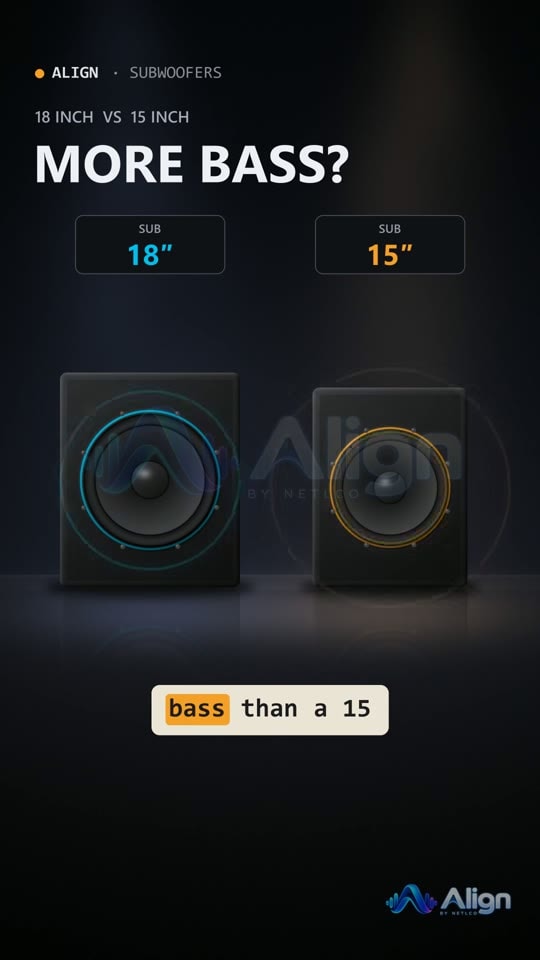 1:05Does an 18 inch sub give more bass than a 15?Not always. Bass is moving air, and how much air depends on two things: the cone’s size and how far it moves, its Xmax.
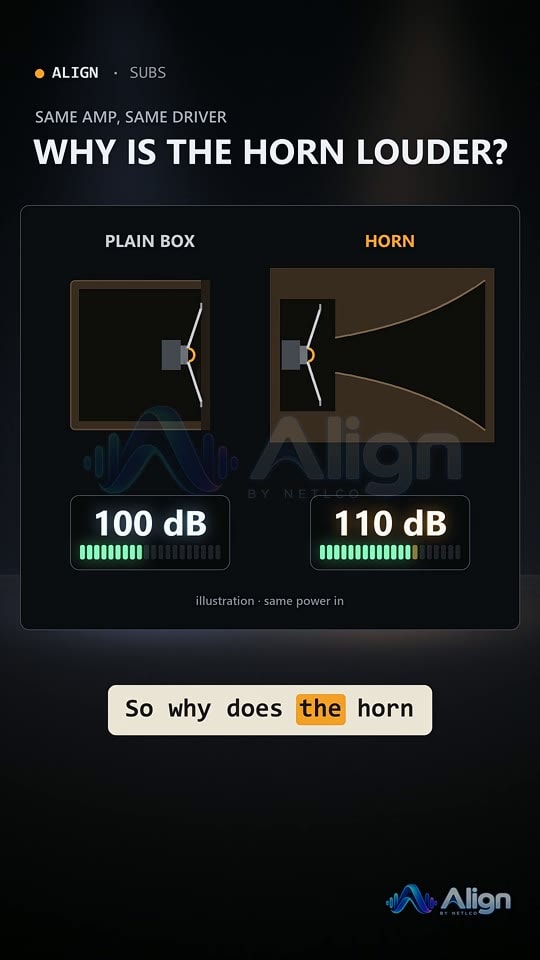 0:58Same amp, same driver: why does the horn sub play louder?A horn matches the cone to the air. A cone in a plain box turns only about 1% of the amp’s power into sound; the horn makes more of the cone’s movement into sound.
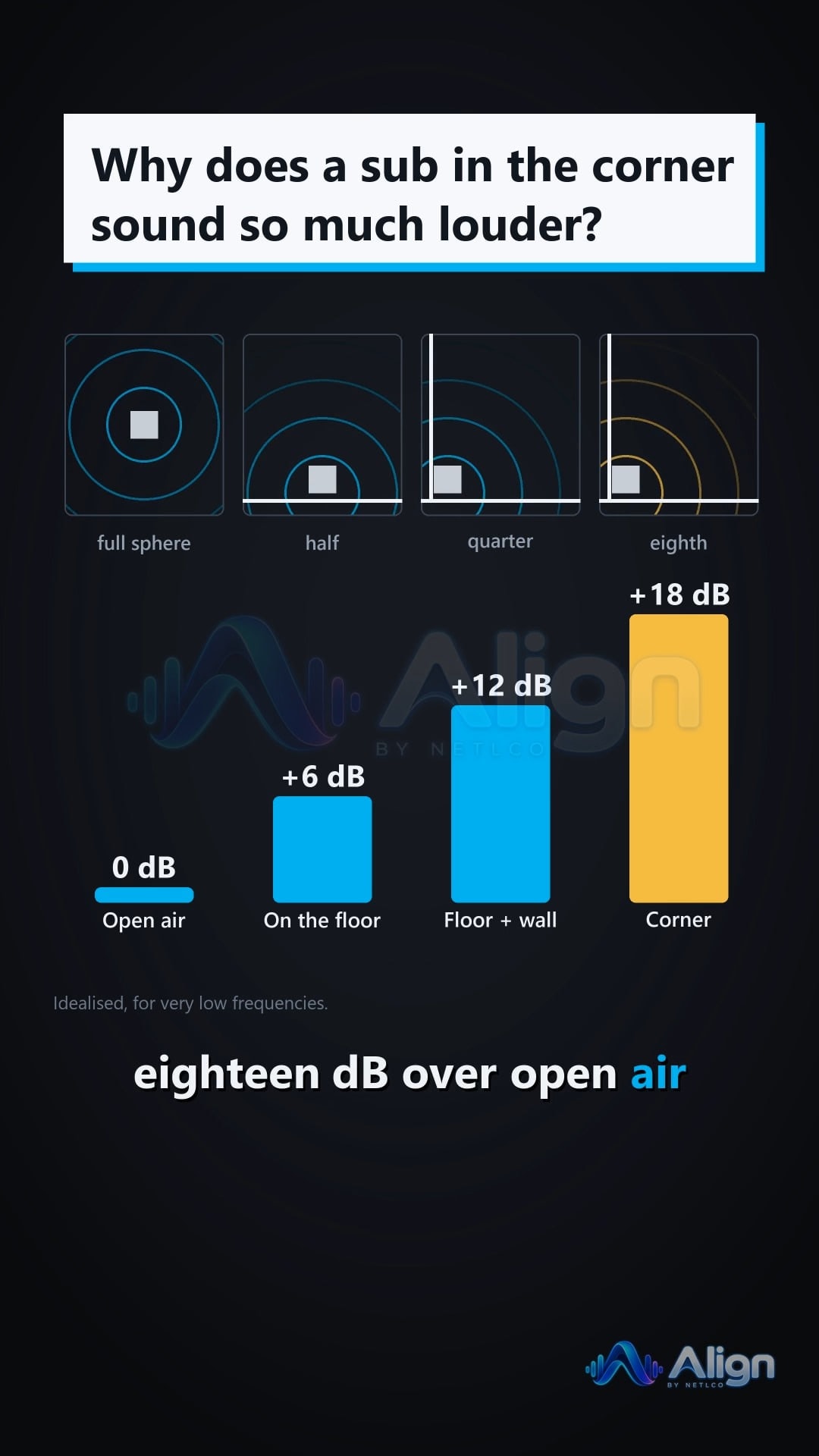 0:31Why does a sub in the corner sound so much louder?Each surface beside it adds about 6 dB: the floor, then a wall, then the corner, up to about 18 dB over open air.
 0:59Two subs facing the crowd: output first or cancellation first?Most bass in front? Output first. A quiet stage? Cancellation first.