
The bass slams the crowd, so why is it so much quieter on stage, right behind the subs?
Bass spreads in every direction. A single sub sends almost as much sound backwards as forwards.
0:49 video
The working
The trick: add a second sub behind it, flip its polarity, and delay it by the travel time between the two. Behind the stack, both arrive at the same moment but opposite, so they cancel. In front, they still add.
Real cardioid stacks are often 15 dB or more quieter behind. That means cleaner monitors and less boom off the back wall.
Sources: cardioid subwoofer guides from major loudspeaker makers.
More questions
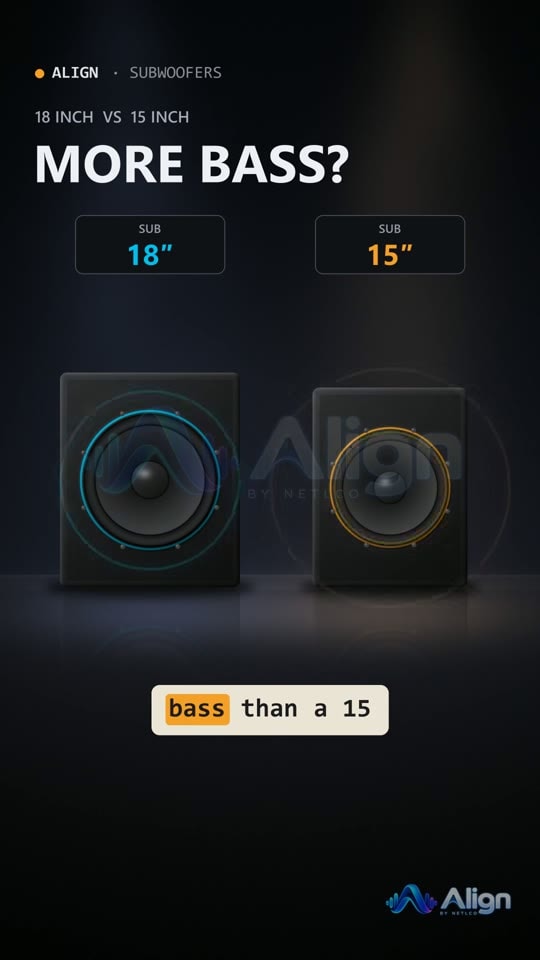 1:05Does an 18 inch sub give more bass than a 15?Not always. Bass is moving air, and how much air depends on two things: the cone’s size and how far it moves, its Xmax.
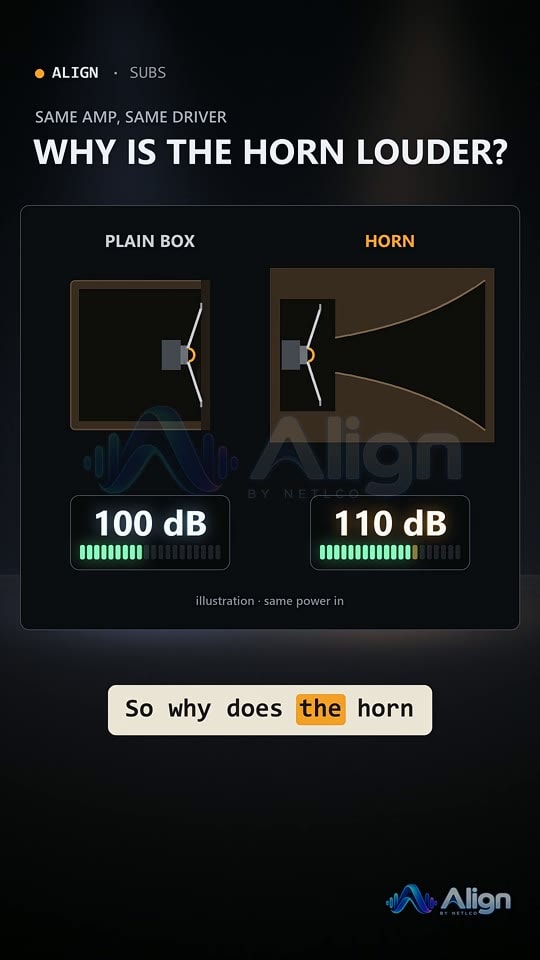 0:58Same amp, same driver: why does the horn sub play louder?A horn matches the cone to the air. A cone in a plain box turns only about 1% of the amp’s power into sound; the horn makes more of the cone’s movement into sound.
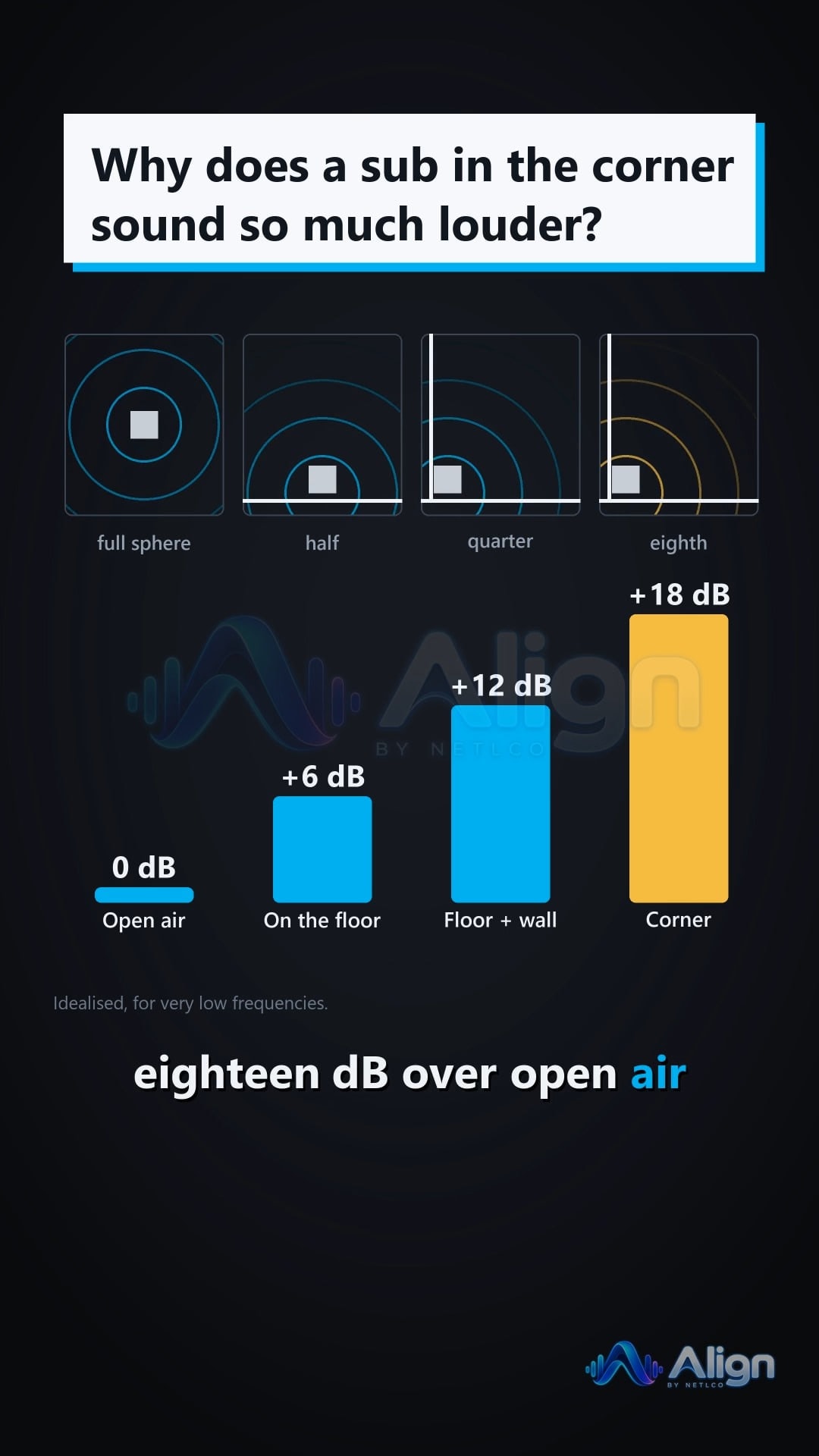 0:31Why does a sub in the corner sound so much louder?Each surface beside it adds about 6 dB: the floor, then a wall, then the corner, up to about 18 dB over open air.
 0:59Two subs facing the crowd: output first or cancellation first?Most bass in front? Output first. A quiet stage? Cancellation first.